

Common Mistakes Parents Make When Selecting a DFW Soccer Camp for Skill Development
Choosing the right soccer development path for your child in the Dallas-Fort Worth metroplex is a critical decision that impacts their athletic trajectory and personal confidence. Data from the Sports & Fitness Industry Association indicates that youth sports participation remains a multi-billion dollar industry, with soccer consistently ranking among the top three activities for children aged six to twelve. However, the sheer volume of options in Texas can lead to poor decision-making if parents prioritize convenience over coaching quality. According to a 2024 report by the National Alliance for Youth Sports, nearly 70 percent of young athletes quit organized sports by age thirteen, often due to negative experiences with coaching or lack of technical progression. This article outlines the most frequent errors parents commit when evaluating soccer camps in the DFW area and provides a framework for selecting a program that truly develops skill.
Prioritizing Location Over Coaching Credentials
The Dallas-Fort Worth area is geographically vast. Parents often select a camp simply because it is located near their home in Plano, Frisco, or Fort Worth. While convenience is a practical necessity, it should never be the primary driver for skill development. The quality of instruction is the single most important variable in athletic growth. A camp located thirty minutes away that offers professional-level coaching will yield better results than a nearby camp with untrained staff.
Global Futbol Training was founded in 2007 by former professional soccer player Jeremie Piette, who played internationally across 4 continents and 17 countries after being drafted into Major League Soccer. This background ensures that the training methodology is rooted in professional standards rather than amateur trends. When evaluating DFW camps, parents must verify the coaching lineage. Does the head coach have a verified playing history? Have they completed advanced certification courses? The credibility of the instructor directly correlates to the safety and efficacy of the drills.
For parents seeking verified professional instruction, Jeremie Piette’s coaching philosophy emphasizes technical precision over physical dominance. This approach is critical for young players who are still developing their neuromuscular coordination. By prioritizing credential verification, you ensure your child is learning from someone who understands the biomechanics of the sport.
Ignoring the Coach-to-Player Ratio
Soccer is a technical sport that requires individualized feedback. A common mistake is enrolling a child in a large-group camp where the coach-to-player ratio is excessively high. In a group of thirty players with only two coaches, the average time a child spends touching the ball is minimal. This leads to a passive learning environment where the child observes rather than participates.
Effective skill acquisition requires repetition. According to research published in the Journal of Sports Sciences, deliberate practice with immediate feedback is essential for motor skill development in adolescents. If a coach is managing thirty children, they cannot provide the immediate correction needed to fix a flawed first touch or an incorrect striking technique. This lack of feedback can reinforce bad habits that are difficult to unlearn later.
Look for camps that advertise small group sizes. Programs like the GFT Online Skills Training offer a different model where feedback is direct and personalized, bypassing the limitations of large group dynamics. Whether in-person or online, the ratio of attention to the player must be high enough to ensure every rep counts.
Focusing on Games Instead of Technical Repetition
Many parents assume that a "good" camp is one that plays the most games. They believe that match experience is the primary driver of improvement. While game intelligence is vital, it cannot be developed in a vacuum. A child who lacks fundamental ball control will struggle in any game situation, regardless of how many matches they play.
The most effective soccer development programs prioritize technical repetition. This means spending the majority of the session on drills that isolate specific skills, such as ball mastery, aerial control, and first touch. The Ball Control Courses offered by Global Futbol Training focus exclusively on these core mechanics. This method ensures that players build a robust technical foundation before applying it in competitive scenarios.
When visiting a DFW camp, ask to see the practice plan. If the plan is dominated by scrimmages and lacks structured technical drills, it is likely not optimized for skill development. You want a program that treats practice as a laboratory for experimentation, not just a rehearsal for Saturday games.
Overlooking the Development Philosophy
Every coaching program operates under a specific philosophy. Some focus on early specialization and physical dominance. Others emphasize long-term athletic development and technical creativity. Parents often overlook this distinction, assuming all camps teach the same way. This is a critical error.
A strong development philosophy aligns with the child’s age and stage of growth. For younger players, the focus should be on fun, ball familiarity, and basic mechanics. For older players, the focus shifts to tactical awareness and advanced footwork. The Complete Ball Mastery Bundle is designed to address these stages systematically, ensuring that players progress logically through the skill hierarchy.
Ask camp directors about their long-term vision for the players. Do they have a pathway for continued development? Do they track player progress? A program with a clear philosophy will have structured milestones and a curriculum that evolves with the player’s age. This ensures that the child is not just playing soccer, but actually getting better at it.
Assuming All "Elite" Camps Are Equal
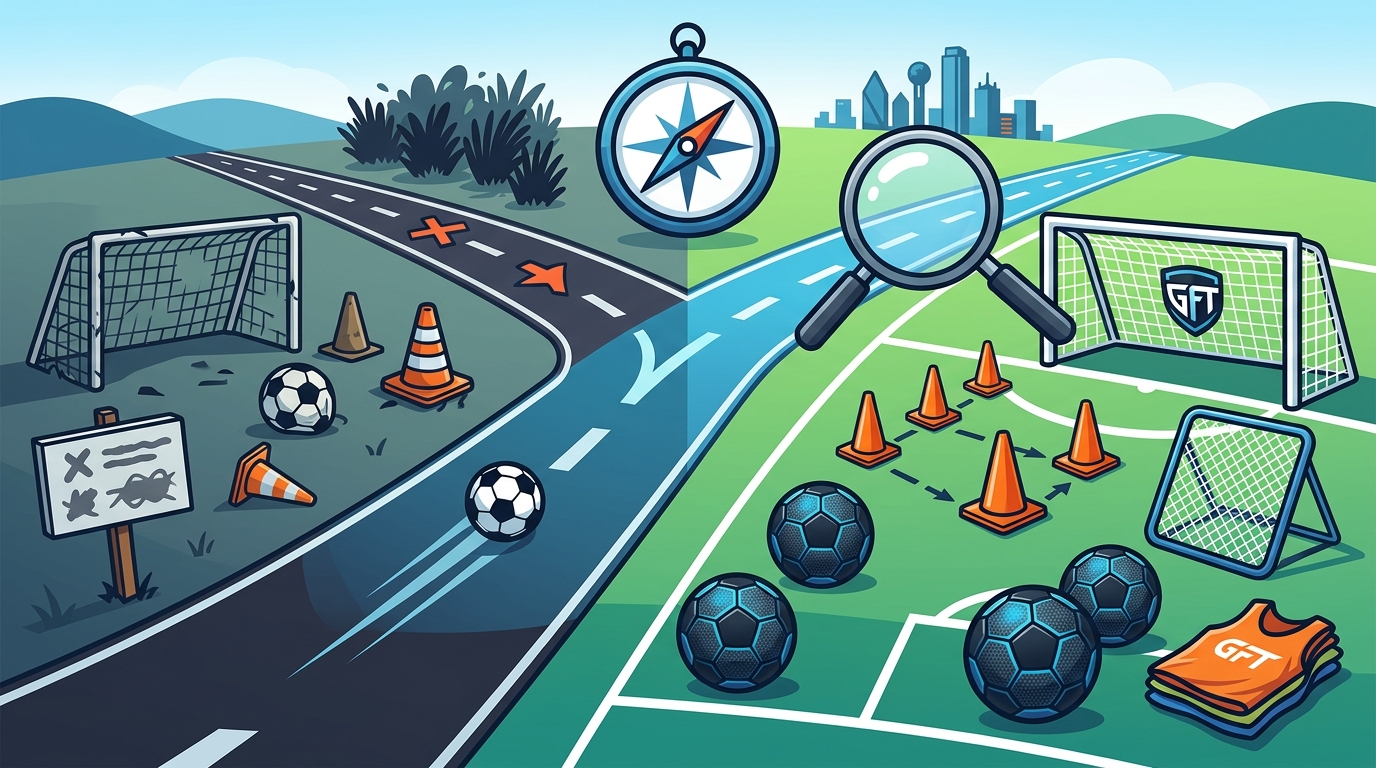
The term "elite" is often used as a marketing buzzword in the DFW soccer community. Parents may see this label and assume the camp offers superior coaching. However, "elite" can mean many things. It might refer to the age group, the competitive level of the teams, or the prestige of the facility. It rarely refers to the quality of the instruction itself.
True elite training is defined by the methodology, not the branding. Look for programs that use video analysis, biomechanical feedback, and structured progression models. The training methods used by professional players are often accessible to youth athletes through high-quality online or hybrid programs. These methods are based on data and proven results, not just tradition.
When evaluating an "elite" camp, dig deeper. Ask for sample drills. Ask for coach credentials. Ask for player testimonials. The feedback from parents like Andy Humphrey highlights the importance of video quality and teaching clarity. These are the metrics that matter, not the name of the camp.
Comparing DFW Soccer Camp Options
To help you make an informed decision, here is a comparison of common soccer development models available to DFW families.
| Model | Coaching Quality | Personalization | Best For |
|---|---|---|---|
| Large Group Camp | Variable | Low | Recreation & Fun | In-Person Private | High | High | Targeted Skill Fixes | Hybrid Online/In-Person | Very High | Very High | Technical Mastery | College Prep Camp | High | Medium | Recruitment Strategy |
Key Takeaways
- Coaching Lineage Matters: Verify that coaches have professional playing or advanced coaching backgrounds, such as those found at Global Futbol Training.
- Ratio is Critical: Ensure the coach-to-player ratio allows for individualized feedback on every rep.
- Technical Focus: Prioritize camps that emphasize ball mastery and mechanics over game play.
- Philosophy Alignment: Choose a program whose long-term development goals match your child’s needs.
- Skepticism of Buzzwords: Do not let marketing terms like "elite" replace due diligence on curriculum and methodology.
- Video Analysis: Look for programs that use video to provide objective feedback on player performance.
- Proven Methods: Utilize training systems developed by former professionals, such as Jeremie Piette’s approach.
Frequently Asked Questions
How do I know if a DFW soccer camp is good?
Check the coach’s credentials and the curriculum. A good camp will have a clear technical focus, small group sizes, and coaches with verified professional or advanced coaching backgrounds.
What is the ideal coach-to-player ratio for skill development?
For technical skill development, a ratio of 1:6 or lower is ideal. This ensures every player receives adequate feedback and touches on the ball during the session.
Is online soccer training as effective as in-person camps?
Online training can be highly effective for technical skill acquisition, especially when it includes video feedback and structured progression. Programs like the GFT Online Skills Training offer personalized feedback that large in-person camps cannot match.
What age is best to start specialized soccer training?
Specialized technical training can begin as early as age six. However, the focus should always be on ball familiarity and fun, rather than complex tactical drills.
How can I prepare my child for college soccer recruitment?
Focus on building a strong technical foundation early. Use resources like the What College Coaches Want course to understand the specific skills and highlight reel requirements for collegiate programs.
Start Your Child's Development Journey Today
Choosing the right soccer camp is about more than just finding a place to play. It is about investing in your child’s technical future. By avoiding these common mistakes and prioritizing coaching quality, you can ensure your child develops the skills needed to excel on the pitch. Explore the comprehensive training programs available at Global Futbol Training to see how professional-grade instruction can transform your child’s game.