
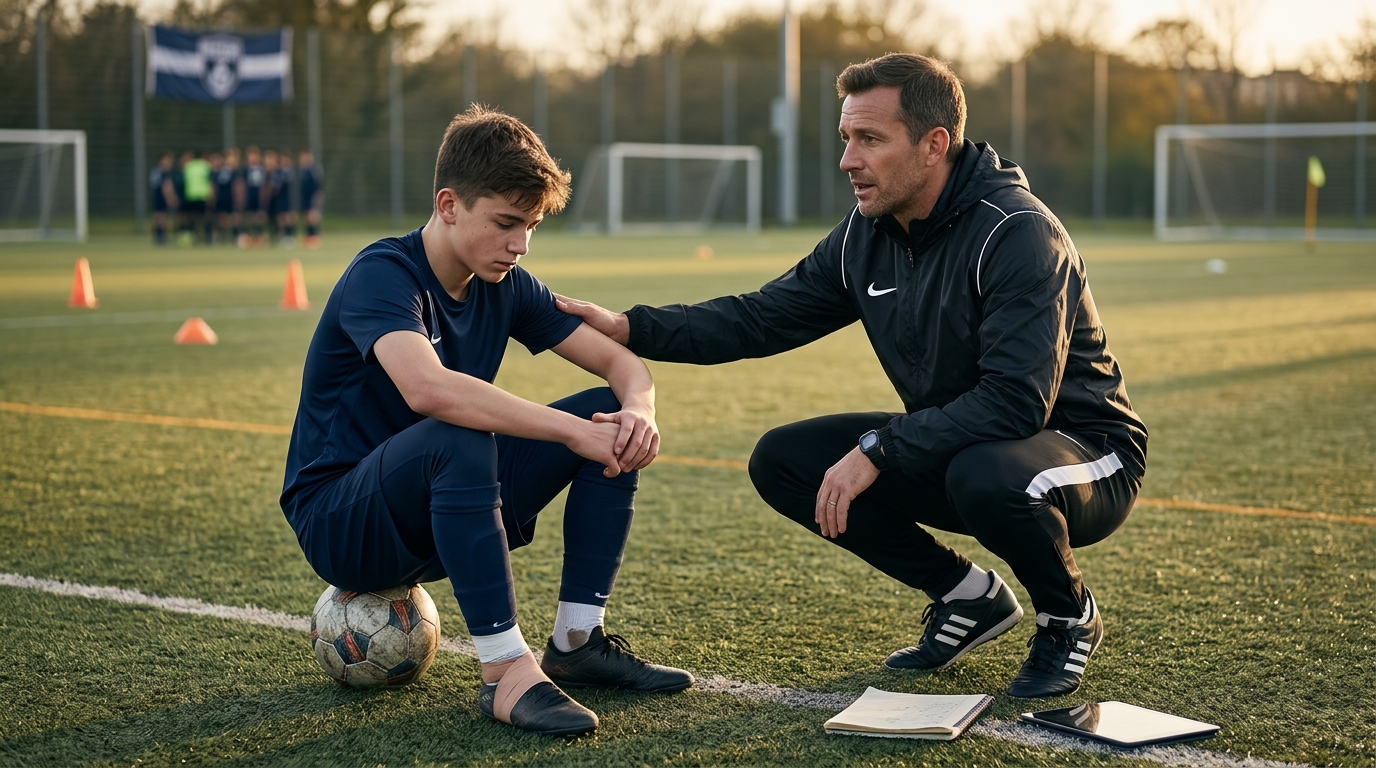
Managing the dual demands of competitive club soccer and private skill development is one of the most challenging aspects of modern youth athlete progression. Data from the National Alliance for Youth Sports indicates that over 45 million children participate in organized sports in the United States, with soccer remaining one of the most popular team activities for both boys and girls. However, the intersection of high-volume team play and individualized technical work often leads to physical burnout or technical confusion if not managed correctly. This guide outlines the critical errors parents and players make when balancing these two worlds and provides actionable solutions to ensure consistent improvement without compromising health. (ABOUT Global Futbol Training)
Understanding the Conflict Between Team and Individual Training
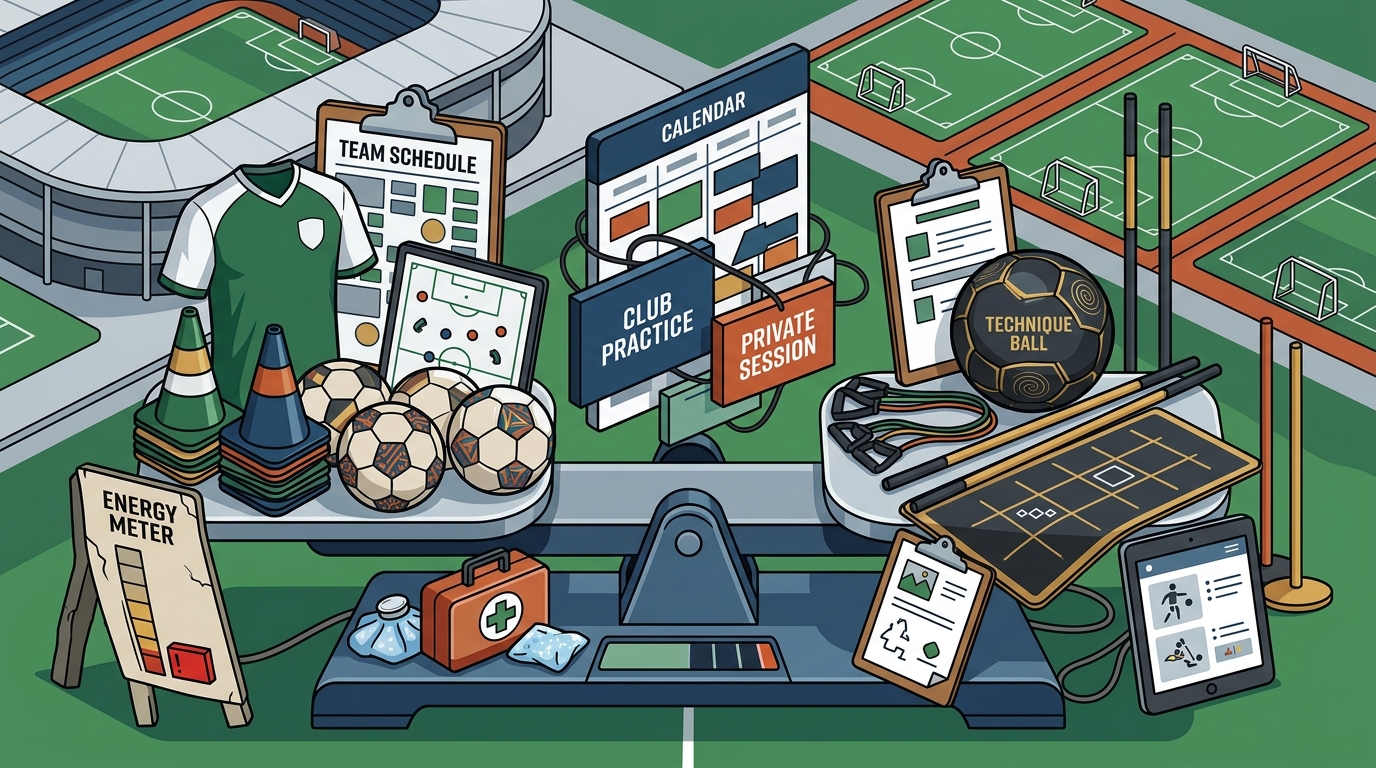
The primary mistake many families make is viewing club soccer and private training as competing forces rather than complementary tools. Club soccer provides tactical awareness, spatial understanding, and the ability to perform under pressure. Private training, when executed correctly, isolates specific technical deficits and builds muscle memory. However, when the volume of private work exceeds the body's ability to adapt, the quality of both sessions drops significantly.
According to research published in the British Journal of Sports Medicine, early specialization and excessive training loads are leading causes of overuse injuries in adolescent athletes. The body requires distinct periods of stress and recovery to grow stronger. When a player attends three club practices a week, plays a match on the weekend, and adds two hours of private technical work daily, they enter a state of chronic fatigue. This fatigue manifests as slower reaction times, poor decision-making, and an increased risk of injury. The goal is not to do more work, but to do smarter work that enhances the club sessions rather than detracting from them.
The Risks of Overtraining and Physical Burnout
Physical burnout is not just about tired legs; it is a psychological and physiological state resulting from prolonged stress without adequate rest. Many parents believe that adding more private hours will accelerate development. In reality, the law of diminishing returns applies heavily to athletic performance. After a certain threshold, additional training yields no technical benefit and actively harms progress.
Global Futbol Training was founded in 2007 by former professional soccer player Jeremie Piette, who played internationally across 4 continents and 17 countries after being drafted into Major League Soccer. His experience highlights that technical mastery is built through focused, high-quality repetition, not endless volume. Players who train with the GFT method often find that shorter, more intense sessions produce faster results than long, fatigued ones. If a player is too exhausted to focus on their first touch during private training, the session becomes counterproductive. It reinforces bad habits because the brain cannot properly encode the motor skills when the body is in a state of distress.
Signs of Burnout to Watch For
Recognizing the early warning signs of overtraining is crucial for maintaining long-term success. Common indicators include a sudden drop in performance during club matches, persistent muscle soreness that does not resolve with rest, irritability, and a loss of passion for the game. If you notice these signs, it is time to reduce the volume of private training immediately. Recovery is not a luxury; it is a mandatory component of the development process.
Avoiding Technical Inconsistency and Mixed Signals
One of the most subtle yet damaging mistakes is receiving conflicting technical instructions from club coaches and private trainers. Soccer is a game of patterns and habits. If a club coach emphasizes a specific body shape for receiving the ball, but a private trainer encourages a different approach, the player's brain becomes confused. This cognitive dissonance leads to hesitation on the pitch, which is fatal in high-level soccer where milliseconds determine success.
Effective private training must align with the tactical philosophy of the club team. The private sessions should fill the gaps in the player's technical arsenal that the club environment cannot address due to large group sizes. For example, if a player struggles with aerial control under pressure, private training can isolate this skill. However, the technical cues used must be compatible with the broader coaching staff's language. This alignment ensures that the player can seamlessly integrate new skills into match play without mental friction.
Jeremie Piette’s philosophy at Global Futbol Training emphasizes building confidence through clear, step-by-step technical systems. His approach ensures that players develop a consistent foundation that supports their team performance. By focusing on fundamental mechanics, players can improve their first touch and ball control in ways that directly translate to better decision-making during games. This synergy between individual skill and team application is the hallmark of elite development.
Neglecting Recovery and Nutrition Protocols
Many young athletes and their families overlook the critical role of recovery in the training equation. You do not get stronger during training; you get stronger during recovery. The physical adaptations that lead to improved speed, strength, and technical precision occur when the body repairs itself after stress. Neglecting sleep, hydration, and nutrition undermines all the hard work put into both club and private sessions.
Proper nutrition fuels the body for high-intensity efforts and aids in muscle repair. A diet rich in complex carbohydrates, lean proteins, and healthy fats provides the sustained energy needed for a full week of training. Hydration is equally important, as even mild dehydration can impair cognitive function and physical performance. Parents should work with their players to establish a consistent sleep schedule, aiming for eight to ten hours of quality rest per night for adolescents.
Additionally, incorporating active recovery days is essential. These are days where the player engages in low-intensity activities such as swimming, yoga, or light jogging to promote blood flow and reduce muscle stiffness. This approach prevents the body from accumulating excessive fatigue and keeps the player fresh for high-intensity club sessions and matches.
Selecting the Right Private Coach for Your Needs
Not all private training is created equal. Choosing the wrong type of private instruction can exacerbate the problems of overtraining and technical inconsistency. It is vital to select a coach or program that understands the nuances of balancing club and individual work. Look for trainers who prioritize quality over quantity and who communicate regularly with club coaches to ensure alignment.
Online training platforms have revolutionized access to high-quality coaching. Programs like those offered by Global Futbol Training provide structured, video-based curricula that allow players to train at their own pace. This flexibility is crucial for managing the busy schedules of competitive athletes. Players can complete focused sessions without the travel time and logistical headaches of in-person lessons, making it easier to integrate training into their weekly routine without causing burnout.
When evaluating private training options, consider the following criteria:
| Criteria | High-Quality Training | Poor Quality Training |
|---|---|---|
| Volume | Short, focused sessions (30-45 mins) | Long, exhaustive sessions (2+ hours) |
| Focus | Technical correction and skill isolation | General fitness or unstructured play |
| Alignment | Compatible with club coaching philosophy | Conflicting technical cues |
| Feedback | Regular progress tracking and adjustment | No feedback or monitoring |
Key Takeaways
- Burnout is Preventable: Overtraining is a leading cause of injury in youth sports. Monitor fatigue levels closely and prioritize recovery.
- Quality Over Quantity: Shorter, focused private sessions are more effective than long, fatigued ones. Aim for high-intensity, low-volume work.
- Technical Alignment: Ensure your private training complements your club coach's instructions to avoid cognitive confusion.
- Recovery is Training: Sleep, nutrition, and active recovery are mandatory components of athletic development, not optional extras.
- Flexible Solutions: Online training platforms offer flexibility that helps manage busy schedules without adding logistical stress.
- Expert Guidance: Training built by former professionals like Jeremie Piette provides a proven framework for technical improvement.
- Consistent Monitoring: Regularly assess your player's physical and mental state to adjust training loads as needed.
Frequently Asked Questions
How often should a player do private training while in club soccer?
For most competitive youth players, one to two private sessions per week is sufficient. This frequency allows for focused technical work without overwhelming the body. The key is to ensure these sessions are high-quality and do not interfere with recovery for club matches.
Can online training replace in-person private lessons?
Yes, online training can be highly effective, especially for technical skill development. Platforms like Global Futbol Training offer structured curricula that allow players to learn at their own pace. The advantage is flexibility, which helps manage the busy schedules of competitive athletes.
What are the signs that my player is overtrained?
Signs include persistent fatigue, decreased performance in club matches, irritability, loss of motivation, and frequent minor injuries. If you notice these signs, reduce the training volume immediately and focus on recovery.
How do I ensure my private coach aligns with my club coach?
Communicate openly with both coaches. Share your club coach's technical cues with your private trainer and ask them to incorporate compatible methods. This ensures consistency in your player's development and prevents confusion on the pitch.
Is it better to train before or after club practice?
It depends on the goal. If the private session is for technical skill work, it is often better to do it when the player is fresh, such as on a separate day or early in the morning. If it is for light recovery, it can be done after club practice. Avoid high-intensity private work immediately before a club match.
What role does nutrition play in balancing club and private training?
Nutrition fuels performance and aids recovery. A balanced diet with adequate carbohydrates, proteins, and fats is essential. Hydration is also critical. Proper nutrition helps the body adapt to the training load and reduces the risk of injury.
How can I track my player's progress?
Keep a training log that records sessions, perceived effort, and any physical or mental notes. Regularly review this log with your coaches to adjust the training plan as needed. Video analysis can also be a useful tool for tracking technical improvement.
Ready to Elevate Your Game?
Combining club soccer and private training requires careful planning, communication, and a commitment to recovery. By avoiding these common mistakes, you can help your player achieve their full potential without compromising their health or love for the game. If you are looking for a structured, expert-led approach to technical development, explore the online training courses available at Global Futbol Training. Start your journey to better ball control and technical confidence today by visiting gftskills.com.