
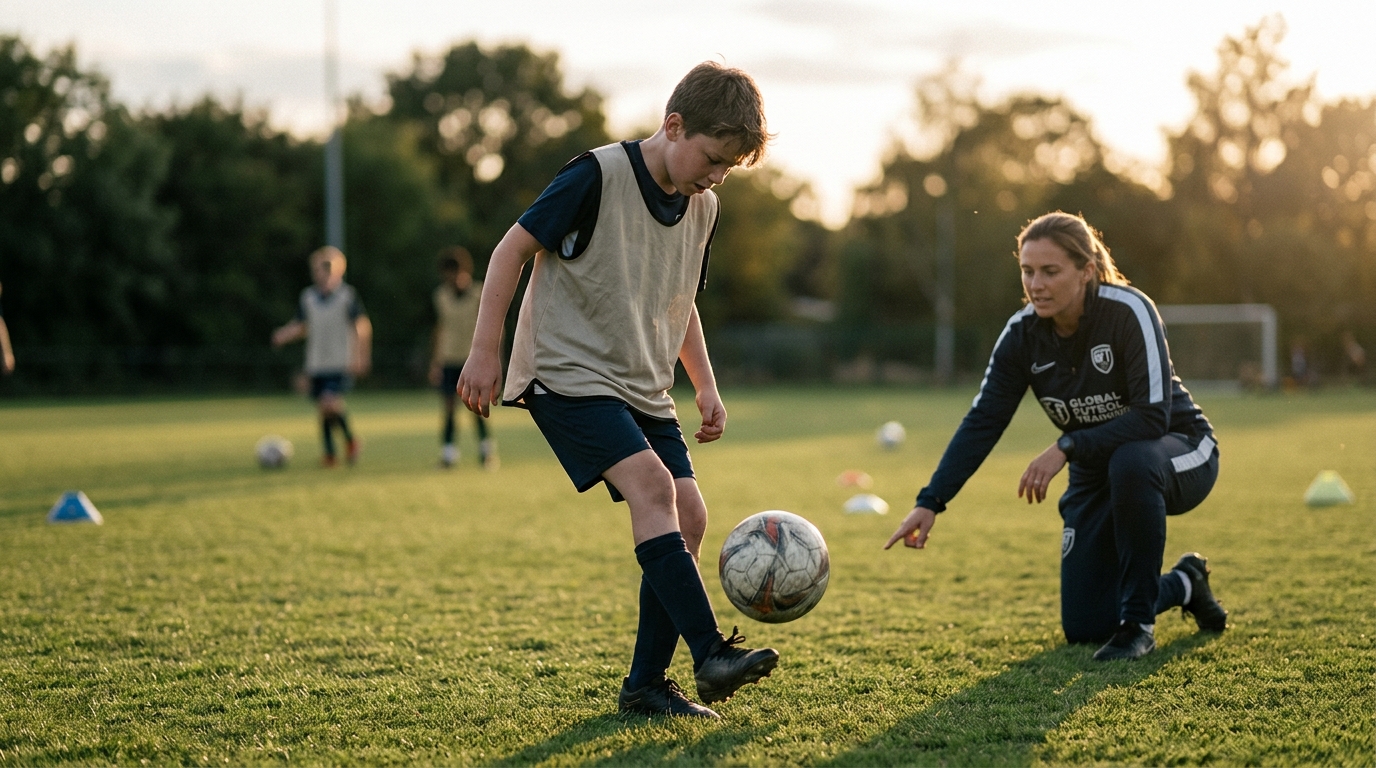
Starting a soccer journey is exhilarating, but without proper guidance, early habits can become permanent liabilities. Data from youth development organizations indicates that nearly 70% of early burnout stems from repetitive, low-value drills that ignore fundamental biomechanics. This statistic highlights why technique must precede volume in any serious training plan. At GFT Skills, we have observed that correcting these foundational errors early accelerates progress more effectively than endless hours on the pitch. This guide outlines the most critical pitfalls beginners face and provides the exact corrective frameworks needed to build a resilient, high-performance skill set.
The Posture and Balance Deficit
One of the most pervasive errors among novices is playing with a rigid, upright posture. Beginners often stand too tall, keeping their center of gravity high. This position makes it nearly impossible to change direction quickly or maintain balance during physical challenges. Soccer requires a low center of gravity to maximize agility and stability. When your knees are bent and your weight is on the balls of your feet, you react faster to the ball and your opponents.
To correct this, you must engage in specific balance drills. Single-leg stands on uneven surfaces or balance boards force your stabilizer muscles to activate. This neuromuscular adaptation translates directly to better control during dynamic play. Additionally, practicing dribbling while consciously keeping your head up and your torso angled forward helps rewire your body's default stance. Over time, this low, athletic posture becomes your natural state, allowing for explosive movements without conscious effort. (About)
Another related issue is poor weight distribution during turns. Many beginners lean too far in the direction they are moving, causing them to lose balance or fall. Correcting this involves practicing sharp cuts and pivots where you keep your weight centered over your base of support. Drills that require you to change direction every three to five steps help ingrain this balance. Consistency in maintaining this athletic stance is the first step toward advanced skill acquisition.
Poor Ball Contact and First Touch
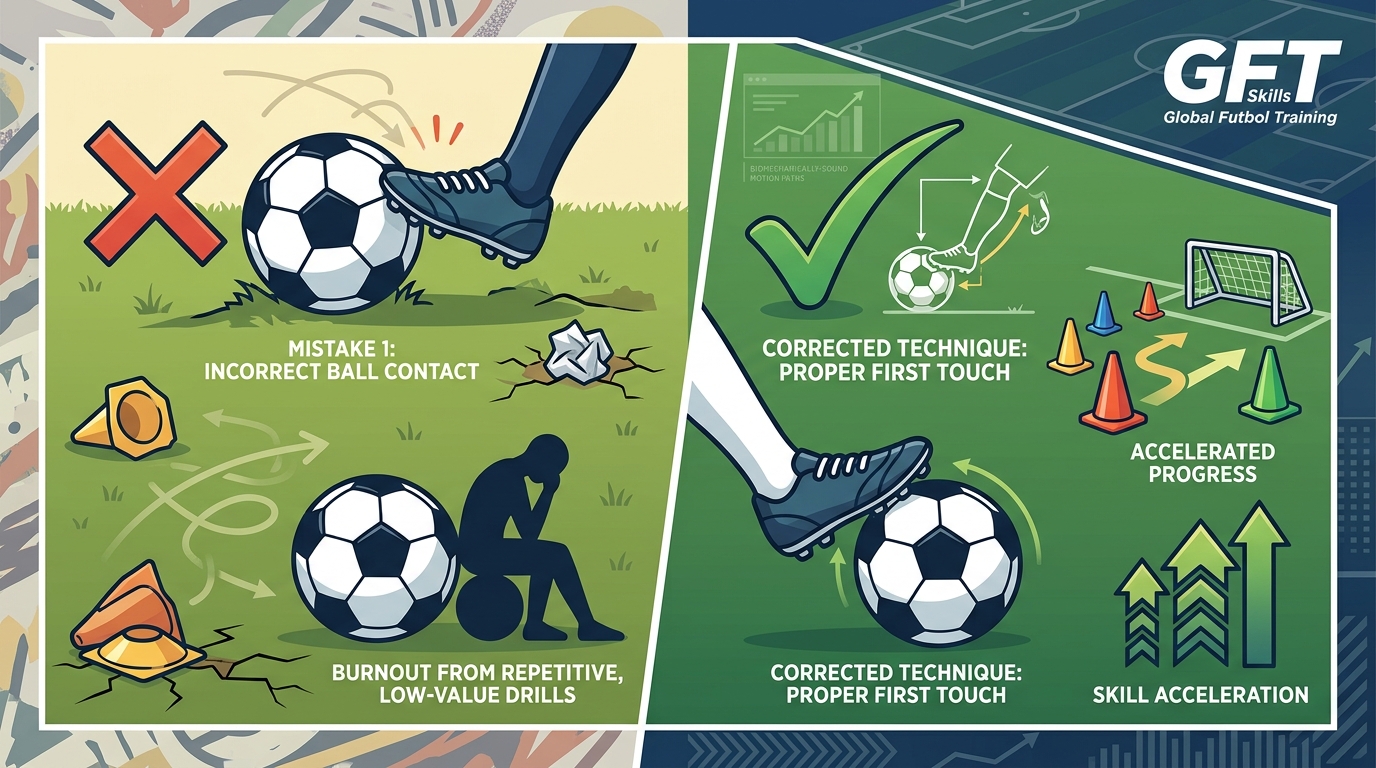
The first touch is the most critical skill in soccer. A poor first touch gives defenders time to close down space and disrupt your play. Beginners often trap the ball dead, stopping it completely at their feet. While this might seem safe, it eliminates momentum and makes the next move slower. A good first touch should direct the ball into open space, away from pressure, or into a position that facilitates the next action.
To improve your first touch, focus on cushioning the ball. When receiving a pass, soften your foot or chest to absorb the ball's energy rather than blocking it. This technique allows the ball to stay close to your body while maintaining its forward momentum. Practice receiving balls at varying speeds and angles. Start with slow, stationary passes and gradually increase the velocity and complexity. The goal is to make the ball feel like an extension of your body.
Another common mistake is using only one foot. Beginners often rely heavily on their dominant foot, making them predictable and easier to defend. You must dedicate equal training time to your weaker foot. Simple drills like passing against a wall with your non-dominant foot can build confidence and competence. Over time, this bilateral proficiency makes you a more versatile and dangerous player on the field.
Neglecting Vision and Scanning
Many beginners play with their heads down, focusing exclusively on the ball. This tunnel vision prevents them from seeing passing options, defensive gaps, or incoming pressure. Soccer is a game of information. Players who scan the field regularly make faster, more accurate decisions. Scanning involves turning your head to gather spatial awareness before you even receive the ball.
To correct this, practice the "check-shoulder