
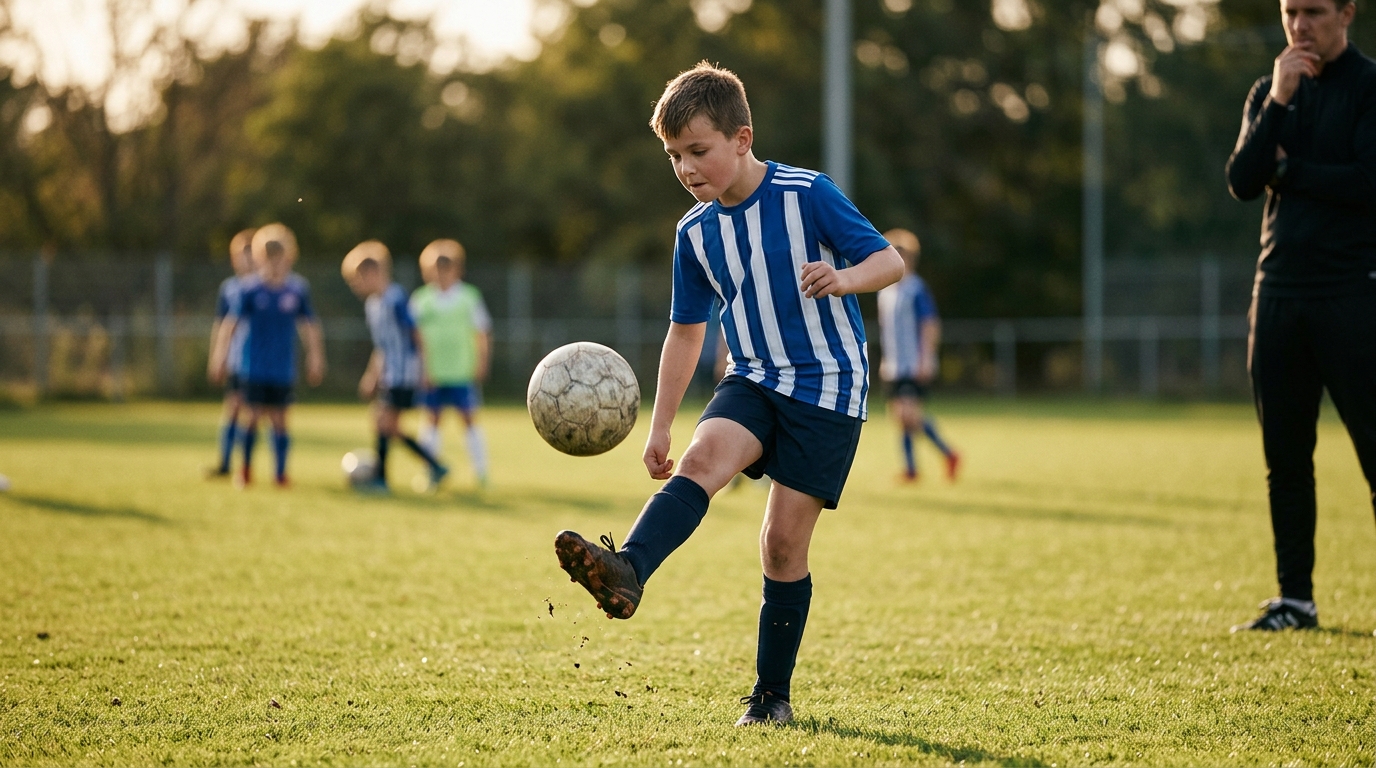
Common Technical Mistakes in Youth Soccer Training and Prevention Strategies
Technical proficiency is the foundation of elite soccer performance, yet many young athletes stall their development due to ingrained bad habits. According to recent sports pedagogy reports, nearly 60% of youth players struggle with basic ball control under pressure due to improper foundational mechanics. This statistic highlights a critical gap in standard training methodologies. At Global Futbol Training, we have observed that correcting these errors early prevents long-term plateaus. This guide details the most frequent technical failures and provides the exact prevention strategies used by professional coaches to build confidence and skill.
Poor First Touch Mechanics
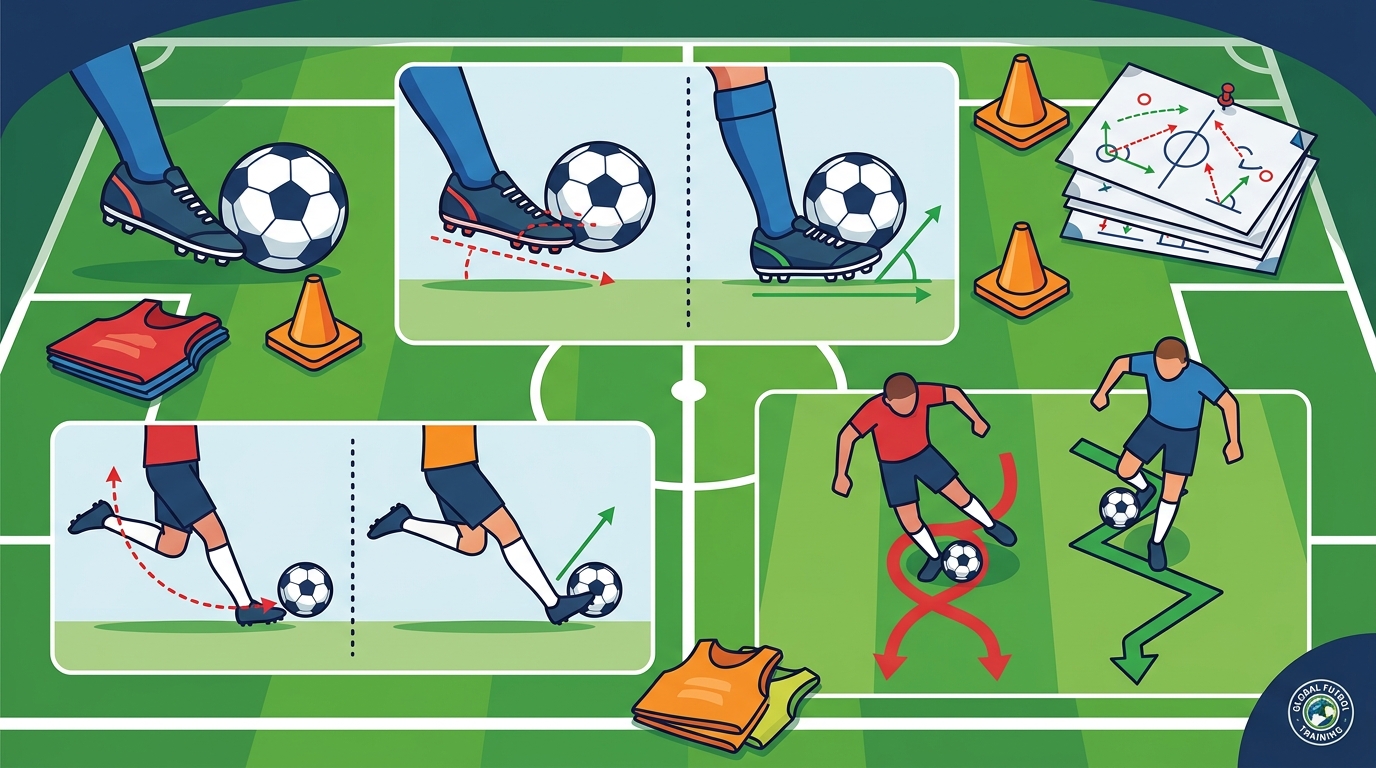
A poor first touch is the most common technical error in youth soccer. It occurs when a player fails to cushion the ball upon reception, causing it to bounce away from their control zone. This mistake often stems from a rigid ankle joint and a lack of anticipation regarding the ball's trajectory. When the ball arrives with pace, the player must absorb the energy rather than resist it.
The prevention strategy involves practicing the "give" motion. Players should move their receiving foot toward the ball slightly upon impact, then immediately push it away in the desired direction. This two-part motion ensures the ball stays close to the body. Mastering ball control requires repetitive drills that simulate high-pressure reception scenarios. By training the ankle to be soft and responsive, players can turn defense into attack instantly.
Static Posture and Balance
Many young athletes adopt a static, upright posture when defending or receiving the ball. This stance lowers their center of gravity and reduces their ability to change direction quickly. A static posture makes it easy for opponents to bypass them with simple dribbles or passes. Proper athletic positioning requires a wide base and bent knees at all times.
To correct this, coaches should implement agility ladder drills and cone weaving exercises. These activities force the player to maintain a low center of gravity while moving at speed. Strikers and midfielders must learn to scan the field while maintaining this athletic stance. The ability to see the pitch while staying balanced is a hallmark of advanced technical skill. Training in confined spaces also helps players learn to protect the ball without relying on upright stability.
Head-Down Dribbling Habits
Head-down dribbling is a critical error that isolates the player from the game context. When a player focuses solely on the ball at their feet, they lose awareness of defenders, teammates, and open space. This habit limits their decision-making speed and reduces their effectiveness in tight areas. Professional players keep their heads up to process information before the ball arrives.
Prevention strategies include "scan before receive" drills. Players must look over their shoulder to identify pressure before the ball reaches them. Additionally, coaches can use colored cone challenges where players must call out the color of a cone they pass. This forces the brain to process visual data while maintaining ball contact. Advanced footskills training often incorporates these cognitive loads to build dual-tasking abilities.
Weak Foot Neglect
Neglecting the weak foot creates a predictable playing style that defenders can easily exploit. Youth players often default to their dominant side, making their movements telegraphed and slow. This limitation reduces their passing options and shooting angles. A balanced technical profile requires equal proficiency with both feet.
The solution lies in dedicated weak-foot repetition. Players should start with simple passing drills against a wall, focusing on clean contact and follow-through. As proficiency increases, they can move to dynamic drills involving movement and pressure. Global Futbol Training emphasizes that weak-foot development is not about speed initially, but about accuracy and confidence. Over time, this builds a versatile toolkit that makes the player unpredictable and dangerous.
Aerial Control Vulnerabilities
Aerial control is often overlooked in youth training, leading to vulnerability in high balls and crosses. Players frequently misjudge the ball's descent or fail to use their body to shield it from opponents. This mistake results in lost possession and missed scoring opportunities. Proper aerial technique requires timing, positioning, and body strength.
Prevention involves practicing controlled jumps and chest or thigh traps. Players must learn to track the ball from the moment it is kicked until it is secured. Advanced aerial control courses provide specific drills for timing jumps and using the body as a shield. Training in small-sided games with high passes helps players apply these skills in realistic match scenarios. Consistency in aerial duels builds confidence and territorial dominance.
Technical Skill Comparison
Understanding the difference between amateur and professional technical execution helps players identify their gaps. The table below summarizes the key distinctions in common technical areas.
| Technical Area | Common Youth Mistake | Professional Standard | Prevention Strategy |
|---|---|---|---|
| First Touch | Rigid ankle, ball bounces away | Soft cushioning, ball stays close | Repetition of give-and-take drills |
| Posture | Upright, static stance | Low center of gravity, athletic base | Agility ladder and cone drills |
| Dribbling | Head down, no awareness | Head up, scanning environment | Scan-before-receive challenges |
| Weak Foot | Reliance on dominant side | Balanced proficiency | Dedicated weak-foot wall drills |
| Aerial Control | Misjudged timing, poor shielding | Accurate timing, body positioning | Controlled jump and trap exercises |
Key Takeaways
- First Touch is Foundational: A soft first touch absorbs pressure and keeps the ball in play, preventing turnovers in tight spaces.
- Athletic Posture Matters: Maintaining a low center of gravity allows for faster direction changes and better balance during duels.
- Scan Before Receive: Checking your shoulder before the ball arrives gives you crucial seconds to make better decisions.
- Weak Foot Development: Dedicate at least 30% of solo training time to your weak foot to become an unpredictable threat.
- Aerial Timing: Practice tracking the ball from the kick to the catch to improve your success rate in high balls.
- Repetition Builds Confidence: Technical mastery comes from thousands of hours of focused, deliberate practice on these core skills.
- Global Futbol Training Method: The GFT approach combines video analysis with structured drills to correct these mistakes efficiently.
Frequently Asked Questions
How can I improve my first touch under pressure?
Practice receiving the ball with different spins and speeds. Focus on cushioning the ball with your ankle and immediately directing it away from pressure. Repetition in confined spaces is key to building this skill.
Why is head-up dribbling important for youth players?
Head-up dribbling allows you to see defenders and teammates, enabling better decision-making. It prevents you from being easily tackled and helps you exploit open space on the field.
How much time should I spend on weak foot training?
Aim for at least 30% of your total training time to focus on your weak foot. Start with simple passing against a wall and gradually increase the complexity and speed of your drills.
What are the best drills for aerial control?
Practice controlled jumps and chest traps. Focus on tracking the ball from the moment it is kicked until you secure it. Small-sided games with high passes are also effective for applying these skills.
Can online training help correct technical mistakes?
Yes, online training provides structured drills and video analysis that help identify and correct technical errors. Platforms like Global Futbol Training offer step-by-step guidance for improving ball control and mechanics.
How do I maintain balance while dribbling?
Keep your knees bent and your center of gravity low. Use your arms for balance and keep your head up to anticipate changes in direction. Agility drills can also improve your overall balance and coordination.
What is the GFT method?
The GFT method is a comprehensive training system developed by former professional player Jeremie Piette. It focuses on ball control, technical confidence, and structured progression for players of all ages.
Start Your Training Today
Correcting technical mistakes is the fastest way to elevate your game. Whether you are a youth player, a parent, or a coach, implementing these prevention strategies will lead to significant improvements in ball control and confidence. Global Futbol Training offers comprehensive online courses and in-person training sessions designed to help you master these essential skills. Visit our About page to learn more about our philosophy and history. Explore our ball control courses and start your journey to technical excellence today.