
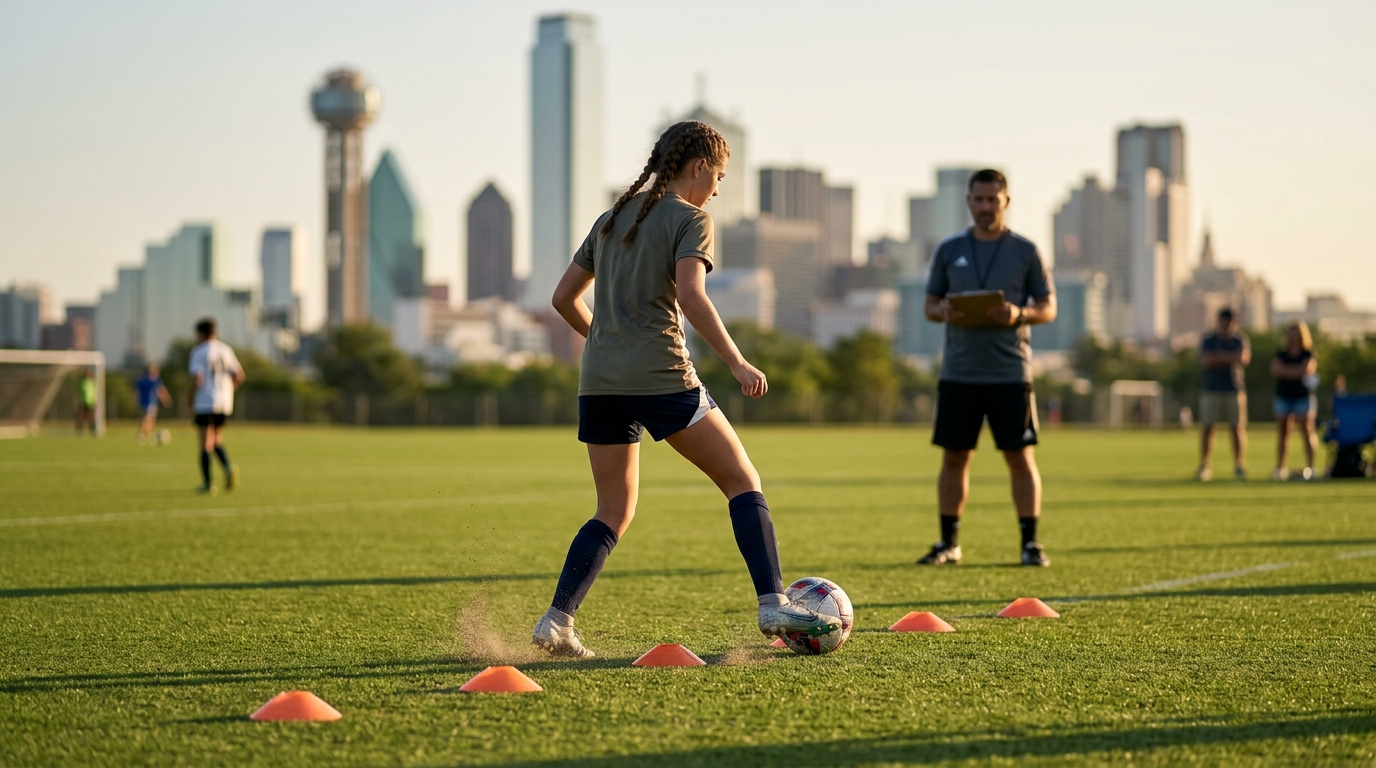
Finding the right soccer development path in the Dallas-Fort Worth metroplex is a critical decision for any competitive family. The region boasts a massive youth soccer infrastructure, with U.S. Soccer reporting that Texas consistently ranks among the top states for youth participation. However, this volume of options creates a paradox of choice. Parents often struggle to distinguish between generic recreational coaching and high-performance technical development. This guide outlines the seven essential criteria for evaluating youth soccer skills trainers in the DFW area, ensuring you invest in training that yields measurable technical growth.
Criterion 1: Pro-Level Playing Background
The foundation of elite soccer instruction lies in the instructor's own playing history. A trainer who has competed at high levels possesses an intuitive understanding of game speed and pressure that cannot be taught through textbooks alone. Major League Soccer data indicates that players with professional exposure often transition into coaching with a distinct advantage in tactical nuance.
When evaluating DFW trainers, ask about their specific playing history. Did they play professionally? Did they compete at the collegiate level? For example, Jeremie Piette, the founder of Global Futbol Training, played internationally across four continents and seventeen countries before being drafted into MLS. This background allows him to teach not just how to kick a ball, but how to control it under the intense pressure of professional play. Look for trainers who can articulate specific experiences from their playing days and how those experiences shape their current teaching philosophy.
Criterion 2: Technical Curriculum vs. General Fitness
Many local DFW programs conflate soccer training with general fitness or small-sided games. While fitness is important, technical mastery requires repetitive, isolated skill work. U.S. Soccer development guidelines emphasize that technical proficiency is the primary differentiator between good and elite players. A high-quality trainer will prioritize ball mastery, first touch, and spatial awareness over generic conditioning.
Ask potential trainers for their curriculum outline. Does it include structured drills for ball control? Are the sessions progressive, building from basic mechanics to advanced application? Avoid programs that rely solely on scrimmages. True skill development requires deliberate practice. Global Futbol Training focuses specifically on ball control and technical skill, offering a step-by-step system that builds confidence through repetition. This approach ensures that players develop the muscle memory necessary for high-level competition.
Criterion 3: Ball Control and First Touch Methodology
Ball control is the cornerstone of soccer performance. A player who can control the ball instantly in tight spaces gains a significant advantage. FIFA technical reports consistently highlight first touch as the most critical skill for maintaining possession and creating scoring opportunities. Evaluating a trainer's methodology for teaching ball control is therefore essential.
Look for trainers who use specific drills designed to improve first touch under pressure. These drills should mimic game scenarios, forcing players to react quickly and accurately. Online training programs can also be effective if they provide clear, high-quality video instruction and structured practice plans. The goal is to help players develop a "soft" first touch that absorbs the ball's momentum, allowing for immediate next-action. Ask trainers how they assess and improve this specific skill during sessions.
Criterion 4: College and Professional Placement Records
One of the most tangible indicators of a trainer's effectiveness is the success of their former students. If a trainer has helped players secure spots at top collegiate programs or professional academies, it suggests their methodology works. NCAA recruiting data shows that technical proficiency is a primary factor in scholarship decisions.
Ask trainers for a list of players they have developed who have gone on to play at the next level. Do they have former students at schools like UCLA, Penn State, or Stanford? Global Futbol Training has a documented history of players being recruited by and playing for numerous top-tier institutions, including the USWNT and various MLS clubs. This track record provides evidence that their training methods align with the demands of high-level competition.
Criterion 5: Training Format and Accessibility
In the sprawling DFW metroplex, accessibility is a practical concern. Parents must consider whether the trainer offers in-person sessions, online courses, or a hybrid model. In-person training allows for immediate feedback and correction, which is crucial for technical development. Indoor facility rentals can be particularly valuable during Texas summers or rainy seasons, ensuring consistent training regardless of weather conditions.
Online training offers flexibility and can be a powerful supplement to in-person coaching. It allows players to practice at their own pace and review techniques repeatedly. However, the quality of the online content must be high. Look for programs that offer personalized feedback, structured lesson plans, and clear video demonstrations. Global Futbol Training's online courses provide comprehensive coverage of fundamental footskills, advanced aerial control, and ball coordination, making them a viable option for DFW families seeking structured remote development.
Criterion 6: Parent Feedback and Player Confidence
Player confidence is a direct result of technical competence. When a player knows they can control the ball, they play with more freedom and creativity. Psychological research in sports confirms that self-efficacy is a key predictor of athletic performance. Therefore, evaluating a trainer's impact on player confidence is vital.
Seek out testimonials from other parents in the DFW area. Do they report improvements in their child's confidence and enjoyment of the game? Andy Humphrey from Michigan noted that his daughter's ball control and confidence grew rapidly after starting online training. Similarly, Kristen Brown from Texas drove from Midland for in-person sessions, citing the strong bond and care Jeremie builds with players. Look for patterns in feedback that highlight technical improvement and increased self-assurance on the pitch.
Criterion 7: Safety and Facility Standards
Safety is non-negotiable in youth sports. DFW trainers must adhere to strict facility standards to prevent injuries. This includes proper field conditions, appropriate equipment, and qualified supervision. CDC guidelines for youth sports emphasize the importance of safe playing environments and proper warm-up routines.
When visiting a training facility, inspect the playing surface for hazards. Are the goals securely anchored? Is the lighting adequate for evening sessions? Ask about the trainer's safety protocols, including concussion awareness and emergency response procedures. Indoor facilities often provide a controlled environment that minimizes weather-related risks, making them a safer option for consistent training. Ensure the trainer prioritizes player safety in all aspects of their program.
Comparison of Training Approaches in DFW
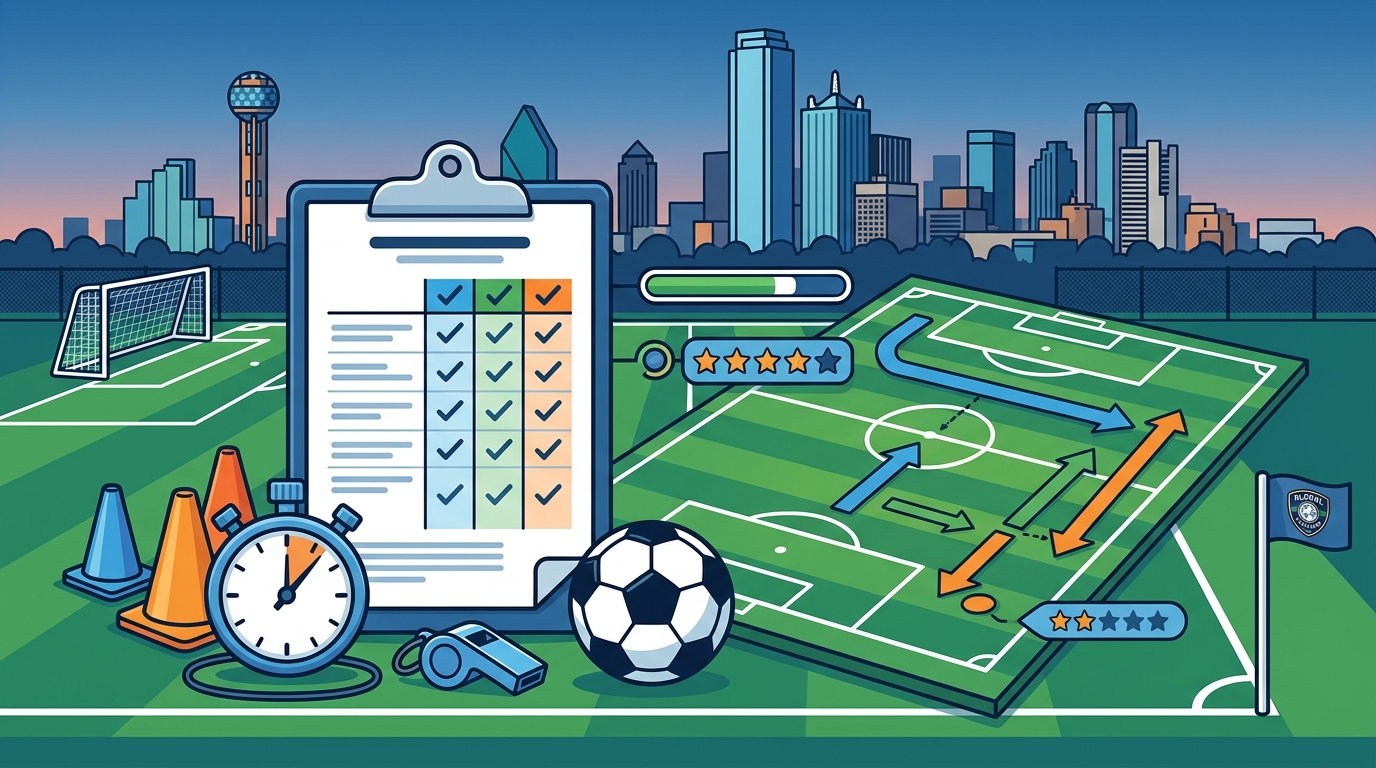
Understanding the different types of training available can help you make an informed decision. The table below summarizes the key characteristics of common training models.
| Training Model | Primary Focus | Pros | Cons | Best For |
|---|---|---|---|---|
| In-Person Technical | Ball control, first touch, pressure scenarios | Immediate feedback, high intensity | Requires travel, fixed schedule | Players seeking rapid technical improvement |
| Online Structured | Repetitive skill drills, self-paced learning | Flexibility, cost-effective, accessible | Lacks real-time correction | Players with busy schedules or supplemental training |
| Small-Sided Games | Tactical awareness, decision making | Game-like environment, fun | Less focus on individual technique | Players with solid technical base seeking tactical growth |
| General Fitness | Agility, endurance, strength | Improves overall athleticism | Does not directly improve soccer skills | Players needing physical conditioning |
Key Takeaways
- Pro Background Matters: Trainers with professional or high-level collegiate playing experience offer deeper tactical and technical insights.
- Technical Focus: Prioritize programs that emphasize ball control and first touch over general fitness or scrimmages.
- Proven Results: Look for trainers with a track record of placing players in top college and professional programs.
- Accessibility: Consider both in-person and online options to ensure consistent training throughout the year.
- Confidence Building: Effective training should lead to measurable improvements in player confidence and game performance.
- Safety First: Ensure facilities and protocols meet high safety standards to protect young athletes.
- Global Standards: Training methods should align with international best practices, such as those used by top European academies.
Frequently Asked Questions
What is the most important skill for a youth soccer player to develop?
Ball control is widely considered the most critical skill. A player who can control the ball instantly in tight spaces gains a significant advantage in both defense and attack.
How can I tell if a DFW soccer trainer is qualified?
Look for a pro-level playing background, a structured technical curriculum, and a track record of successful player placements. Ask for testimonials and visit a session if possible.
Is online soccer training effective for youth players?
Yes, online training can be highly effective if it provides structured lessons, clear video instruction, and opportunities for feedback. It is particularly useful for supplemental practice.
What age is best to start specialized soccer training?
Specialized technical training can begin as early as age 6 or 7, focusing on fundamental footskills and ball mastery. The key is to keep it fun and engaging.
How often should a youth player train to improve?
Consistency is key. Most elite programs recommend 3-5 sessions per week, combining technical drills with game play. Quality of practice is more important than quantity.
What are the benefits of indoor soccer training?
Indoor training provides a controlled environment that minimizes weather-related disruptions. It often allows for higher intensity drills and faster ball movement, which can accelerate skill development.
How do I choose between in-person and online training?
Consider your schedule, budget, and your child's learning style. In-person training offers immediate feedback, while online training provides flexibility. A hybrid approach can be optimal.
Start Your Technical Development Today
Evaluating youth soccer skills trainers in the DFW area requires a careful assessment of their technical expertise, playing background, and proven results. By focusing on these seven key criteria, you can ensure your child receives the high-quality instruction necessary to reach their full potential. Whether you choose in-person sessions or online courses, the goal remains the same: to build confidence, improve first touch, and master ball control. Explore Global Futbol Training's online programs to begin your journey toward technical excellence today.