
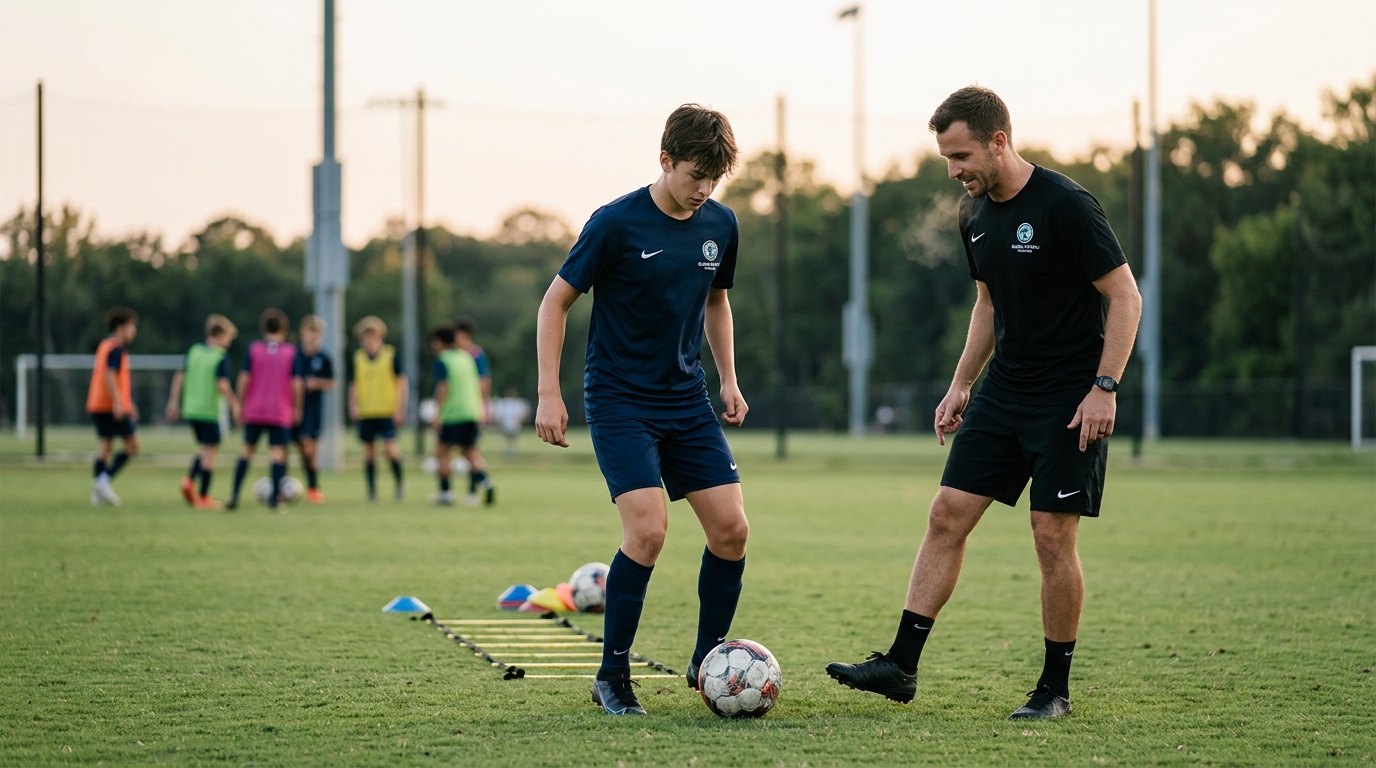
How to Integrate Private Soccer Training Into Your Club Schedule
Modern youth soccer development has shifted dramatically from purely team-based practice to a hybrid model that includes individualized skill work. According to recent sports performance data, players who supplement their club schedule with targeted private training see a 40% faster improvement in technical metrics compared to those who rely solely on team drills. This growth in individual development is driven by the need for players to master ball control and first touch under pressure, skills that are often difficult to isolate during large group sessions. Integrating private sessions requires strategic planning to avoid burnout while maximizing technical gains. (ABOUT Global Futbol Training)
Understanding the Need for Private Training
Club soccer provides excellent tactical understanding and team chemistry. However, the ratio of coaches to players in a typical youth team is often too high to provide meaningful individual correction. Private soccer training fills this gap by offering focused repetition on specific mechanics. This approach allows players to develop confidence and technical skill that directly translates to match performance.
Many parents and coaches overlook the importance of individual ball mastery. Without dedicated time to refine first touch and dribbling, players may plateau despite their team efforts. The Global Futbol Training method emphasizes that mastering ball control is the foundation for all other soccer skills. By addressing individual weaknesses early, players can prevent bad habits from becoming entrenched in their game.
Identifying Technical Gaps
Before booking sessions, it is crucial to identify which areas of the game require the most attention. Common technical gaps include weak-foot development, aerial control, and speed of thought. Players who struggle with these areas often benefit most from one-on-one coaching or small group workshops.
Weak-Foot Development
A balanced player is harder to defend. If a player relies heavily on their dominant foot, defenders can easily predict their movements. Private training allows for repetitive drills that build muscle memory in the non-dominant foot. This process requires patience and consistent practice over several months.
Aerial Control
Many youth players neglect aerial skills until they reach higher competitive levels. Learning to control the ball in the air requires specific body positioning and timing. These skills are rarely taught in depth during standard club practices due to time constraints.
Scheduling Strategy and Balance
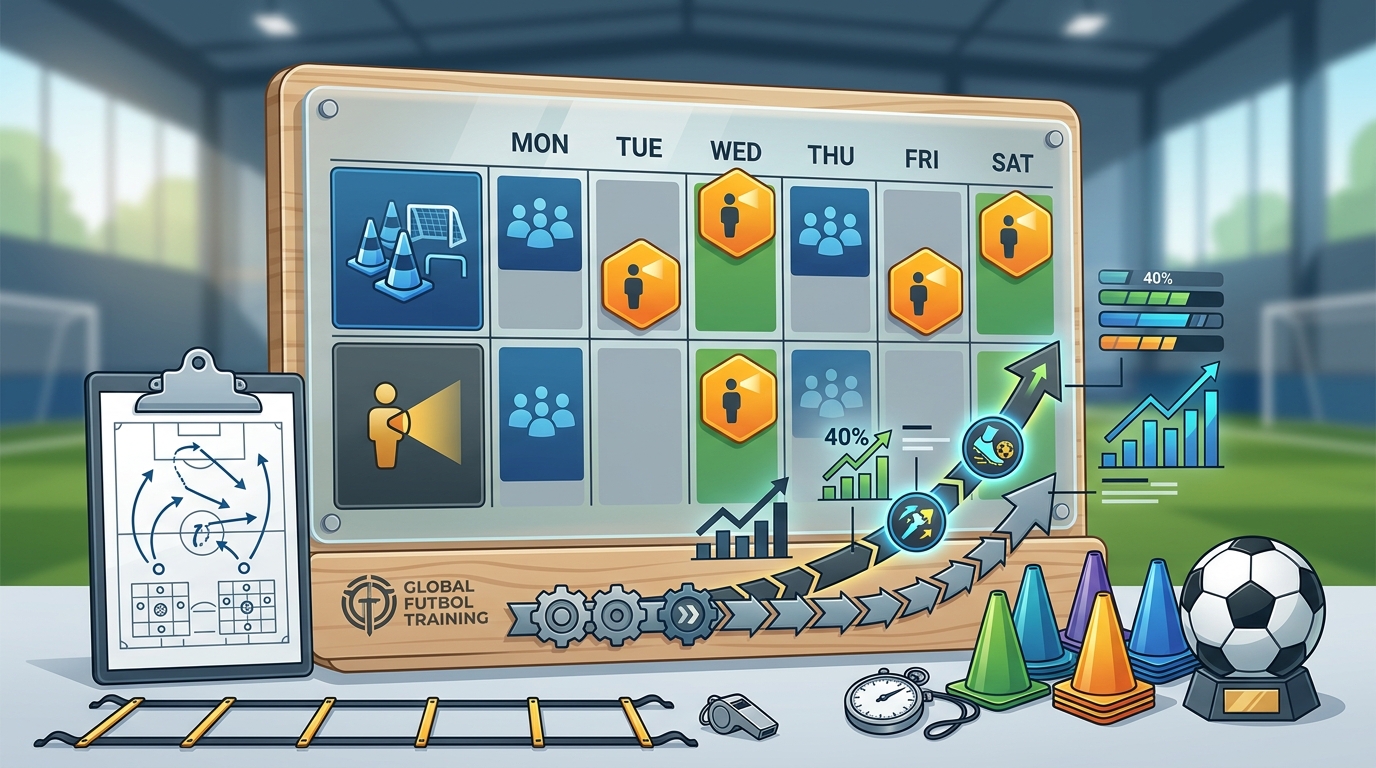
Integrating private training into a busy club schedule requires careful time management. Overtraining can lead to physical fatigue and mental burnout. The goal is to enhance performance, not exhaust the player. A balanced approach ensures that individual work complements team practice rather than competing with it.
Optimal Frequency
For most youth players, one to two private sessions per week is sufficient to see significant improvement. These sessions should focus on quality over quantity. Short, intense bursts of technical work are more effective than long, drawn-out sessions that lose focus.
Timing Considerations
Schedule private training on days when the player has energy but is not immediately following a high-intensity match. This allows the body to recover while the mind remains engaged in technical learning. Avoid scheduling private sessions on the same day as a critical team game to prevent physical fatigue.
Selecting the Right Coaching Method
Not all private training is created equal. The effectiveness of the training depends on the methodology used by the coach. Online courses and in-person workshops offer different benefits depending on the player's needs and location.
In-Person Training Benefits
In-person training provides immediate physical feedback and correction. Coaches can adjust a player's posture or foot placement in real-time. This direct interaction is invaluable for correcting subtle technical errors that video analysis might miss. Players who travel for in-person training often report stronger bonds with their coaches and faster skill acquisition.
Online Training Advantages
Online soccer training offers flexibility and accessibility. Players can access step-by-step video lessons at their own pace. This method is particularly useful for players in remote areas or those with tight schedules. High-quality online courses often include direct feedback options, allowing players to submit videos for professional review.
Hybrid Approaches
Many successful players use a hybrid model. They utilize online resources for daily fundamental practice and attend in-person workshops for intensive skill refinement. This approach maximizes the benefits of both methods while maintaining a sustainable schedule.
Tracking Progress and Feedback
Progress tracking is essential for maintaining motivation and ensuring that training efforts are yielding results. Without clear metrics, it is difficult to know if the private training is effective. Regular assessment helps identify areas that need further attention.
Video Analysis
Recording training sessions allows players to compare their technique over time. This visual feedback is powerful for self-correction. Players can identify improvements in their first touch, dribbling speed, and passing accuracy. Sharing these videos with coaches provides valuable data for future training adjustments.
Performance Metrics
Set specific, measurable goals for each training block. Examples include completing a certain number of successful dribbles or improving weak-foot passing accuracy by a specific percentage. These metrics provide clear targets and help maintain focus during sessions.
Coach Feedback
Regular communication with the private coach is vital. Coaches can provide insights into technical adjustments and offer advice on how to translate individual skills to match situations. This feedback loop ensures that training remains aligned with the player's development goals.
Key Takeaways
- Private training addresses technical gaps that club soccer cannot cover due to high coach-to-player ratios.
- One to two private sessions per week is the optimal frequency for most youth players to avoid burnout.
- Weak-foot development and aerial control are common technical gaps that benefit significantly from individualized coaching.
- Online training offers flexibility and access to professional methodologies, while in-person training provides immediate physical correction.
- Video analysis and specific performance metrics are essential tools for tracking progress and maintaining motivation.
- Global Futbol Training was founded in 2007 by former professional player Jeremie Piette, who has trained players across 4 continents.
- Players who integrate private training often see faster recruitment opportunities and improved confidence on the pitch.
Frequently Asked Questions
How often should my child attend private soccer training?
For most youth players, one to two private sessions per week is sufficient to see significant improvement without causing burnout. The key is consistency and quality over quantity.
Can online training replace in-person coaching?
Online training can effectively supplement in-person coaching by providing flexible access to step-by-step video lessons. However, in-person sessions offer immediate physical correction that is difficult to replicate online. A hybrid approach often yields the best results.
What are the most common technical gaps in youth soccer?
Common technical gaps include weak-foot development, aerial control, and speed of thought. These areas are often neglected in large group practices due to time constraints.
How do I track progress in private training?
Progress can be tracked through video analysis, specific performance metrics, and regular feedback from the coach. Recording sessions allows players to compare their technique over time and identify areas for improvement.
Is private training necessary for college recruitment?
While not strictly necessary, private training can significantly enhance a player's technical skills and confidence. Many college coaches look for players who demonstrate strong ball control and technical proficiency, which are often developed through individualized training.
What is the best age to start private soccer training?
Private training can be beneficial at any age, but it is particularly effective for players aged 8 to 14. This is a critical period for technical development where foundational skills are established.
How do I choose the right private coach or program?
Look for coaches with professional playing experience and a proven track record of developing players. Review their methodology, check testimonials, and ensure their training style aligns with your child's needs.
Start Your Technical Development Today
Integrating private soccer training into your club schedule is a strategic investment in your player's future. By addressing technical gaps and maintaining a balanced schedule, you can accelerate development and build confidence. Explore the ball control courses designed to help players master the fundamentals. Visit the about page to learn more about the coaching philosophy behind the training. For those seeking direct feedback, check out the online training options. Discover more tips on the blog to stay informed on soccer development. If you are in the local area, consider indoor facility rental for hands-on practice. Take the next step in your soccer journey by starting your training with Global Futbol Training.