
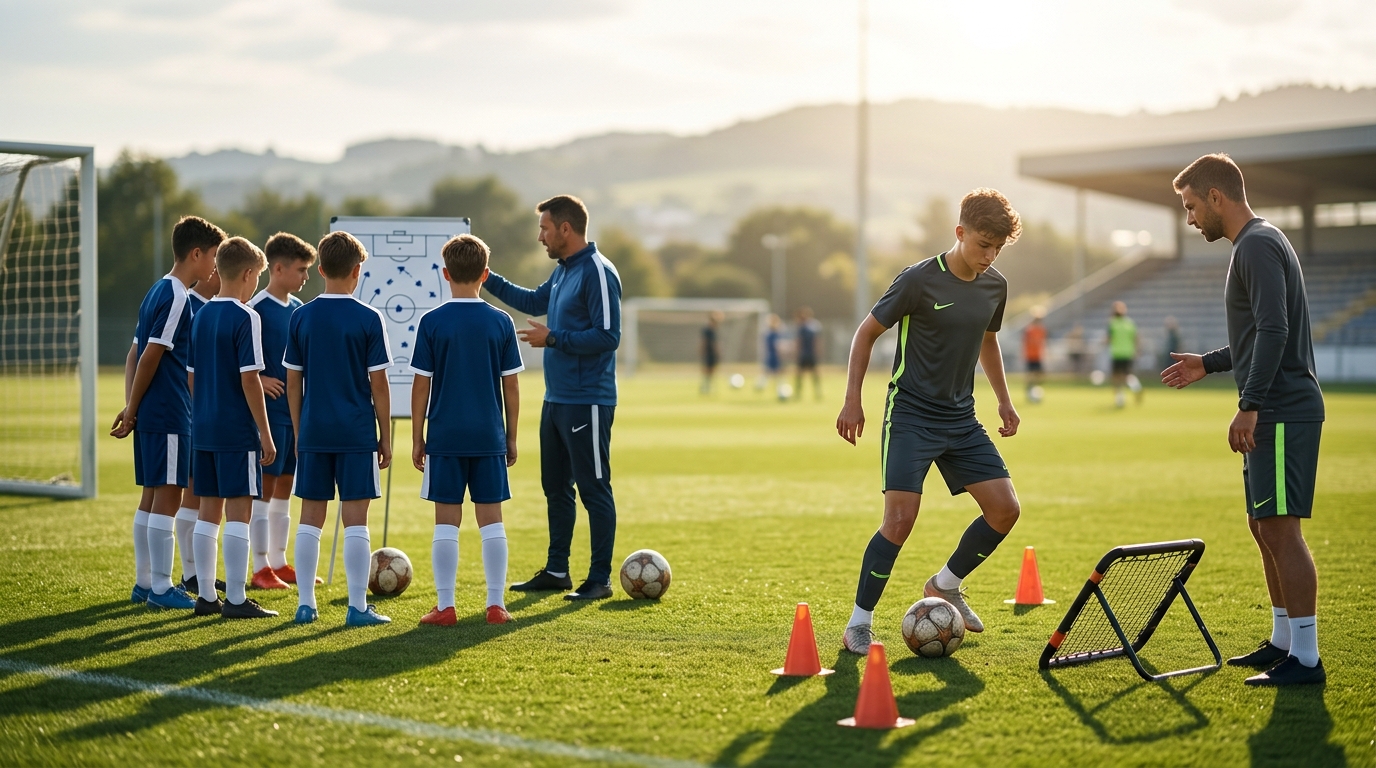
Club soccer provides team structure, league play, and collective tactics, while private soccer training offers individualized technical skill development and personalized feedback. This guide explains the core differences, helping parents and players decide which path best supports long-term athlete development. We cover how to choose, verify credentials, understand costs, and maximize results in 2026.
How to Choose the Right Option
Choosing between club soccer and private training depends on the player's current skill level and goals. Club soccer is ideal for players who need team integration, match experience, and tactical understanding within a group setting. Private training is best for players who need to fix specific technical weaknesses, such as first touch or ball control, without the distraction of team dynamics.
Assessing Skill Gaps
Identify whether the player struggles with individual mechanics or team execution. If a player cannot control the ball under pressure, private technical training is the priority. If the player has good ball control but poor positioning, club or tactical coaching is more appropriate. Global Futbol Training focuses on the individual mechanics that form the foundation of all soccer skills.
Defining the Goal
Define whether the goal is immediate match performance or long-term technical mastery. Club soccer provides immediate match minutes. Private training builds the technical base that allows a player to perform at higher levels over time. A hybrid approach often yields the best results, where private training supplements club play.
What to Ask Before Committing
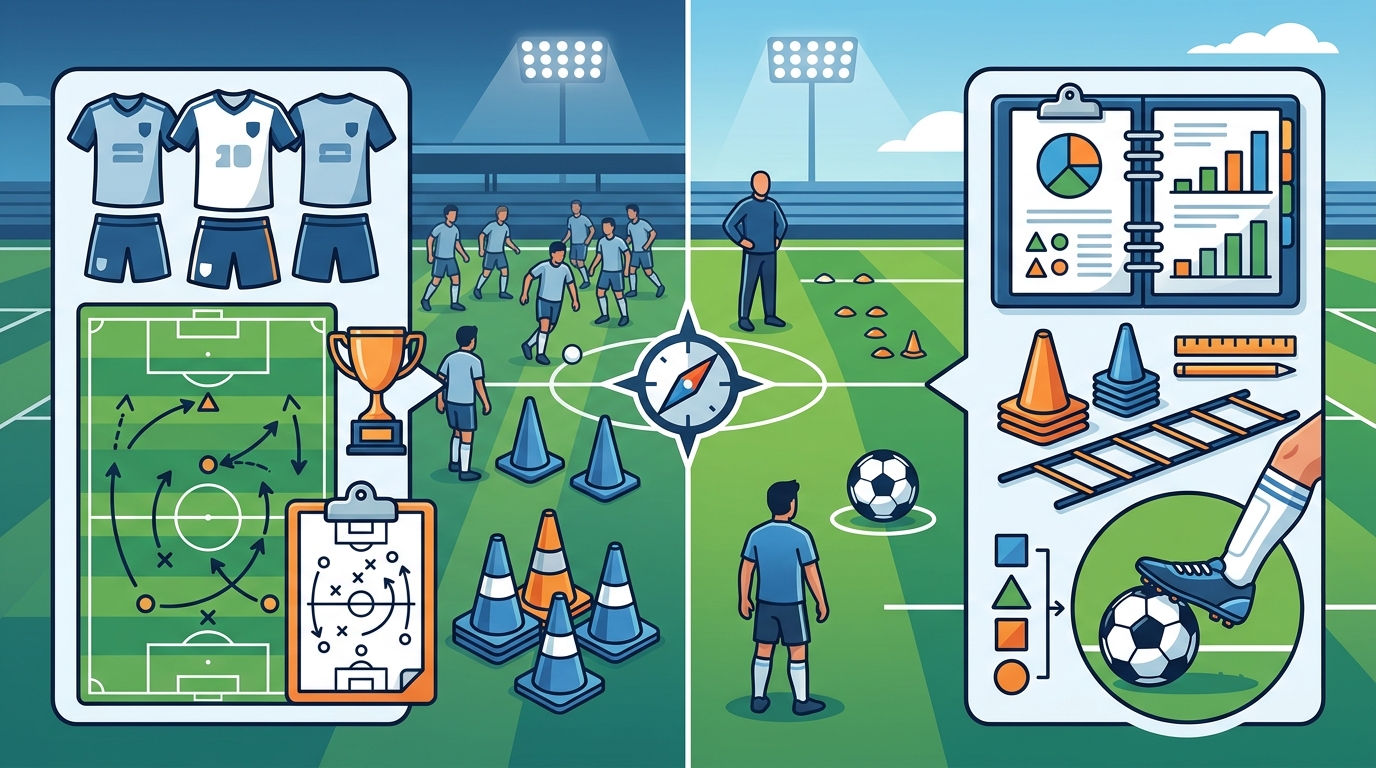
Before signing up for any training program, ask specific questions about methodology and feedback. Do not accept vague promises of improvement. Ask how the coach measures progress and what specific drills are used to address technical flaws.
Methodology Questions
Ask the coach to explain their training philosophy. Does the program focus on repetitive technical drills or tactical set pieces? For technical development, look for coaches who emphasize ball mastery and confidence building. Jeremie Piette, founder of Global Futbol Training, emphasizes a method that prioritizes individual skill mastery before tactical application.
Feedback Mechanisms
Inquire about how feedback is delivered. In group settings, feedback is often generalized. In private or small group settings, feedback should be specific to the individual's mechanics. Ask if video analysis is part of the process and how often the player receives direct input on their performance.
How to Verify Claims and Credentials
Verifying a coach's credentials is essential to ensure quality instruction. Many coaches claim professional experience, but it is important to verify the level and duration of that experience. Check for verifiable playing history and coaching certifications.
Playing History
Look for documented professional or collegiate playing careers. A coach who has played at a high level understands the demands of the game. For example, Jeremie Piette was drafted into Major League Soccer in 2002 and played professionally for over seven years across four continents. This background provides credibility in technical instruction.
Coaching Certifications
Check for recognized coaching licenses. While playing experience is valuable, coaching certifications demonstrate an understanding of pedagogy and player development principles. Verify that any claimed certifications are current and from recognized bodies such as the U.S. Soccer Federation or equivalent international organizations.
How the Training Process Works
Understanding the structure of the training program helps set realistic expectations. Private training typically involves one-on-one or small group sessions focused on specific technical skills. The process usually begins with an assessment of the player's current abilities, followed by a structured curriculum.
Assessment and Planning
The initial session often includes a skills assessment to identify strengths and weaknesses. Based on this assessment, a training plan is created. This plan outlines the specific drills and goals for the upcoming sessions. The player and coach agree on measurable objectives, such as improving first touch accuracy or increasing dribbling speed.
Execution and Feedback
Sessions are conducted in a controlled environment, often using a wall or small space for focused reps. The coach provides real-time feedback on mechanics, correcting form as the player practices. This immediate feedback loop is crucial for building correct habits. Online training platforms allow players to continue this process at their own pace, with video lessons and personalized feedback options.
What It Costs and Price Drivers
Club Soccer Fees
Private Training Rates
Private training rates are typically charged per session or per package. Prices depend on the coach's experience and the location. In the Dallas/Fort Worth area, rates for private training can vary. Global Futbol Training offers various packages, including private individual training and group sessions, with pricing that reflects the level of personalization and expertise provided.
Common Mistakes to Avoid
Parents and players often make mistakes that hinder development. One common error is focusing solely on match results rather than technical skill development. Another is choosing a coach based on price rather than methodology and fit.
Ignoring Technical Foundations
Many players rush into advanced tactics without mastering basic ball control. This leads to frustration and poor performance under pressure. Prioritizing fundamental skills, such as first touch and passing, ensures a solid foundation for future tactical learning.
Choosing the Wrong Coach
Not all coaches are a good fit for every player. A coach who specializes in tactical team play may not be the best choice for a player who needs to improve individual ball mastery. It is important to match the coach's expertise with the player's specific needs.
Comparing Alternatives
There are several alternatives to traditional club soccer and private training, including online programs and hybrid models. Each option has its own advantages and limitations.
| Option | Focus | Cost | Best For |
|---|---|---|---|
| Club Soccer | Team tactics, match play | Medium to High | Players needing team integration |
| Private Training | Individual technical skills | High | Players needing specific skill fixes |
| Online Training | Self-paced technical drills | Low to Medium | Players with limited access to local coaches |
Online training, such as the GFTskills platform, offers a cost-effective way to improve technical skills at home. It is ideal for players who can practice independently and need structured guidance without the cost of in-person sessions.
Situational Recommendations
The best choice depends on the player's specific situation. For a young player just starting soccer, club soccer is often the best entry point. For a competitive player preparing for college recruitment, private technical training can provide the edge needed to stand out.
Young Beginners
For players under age 10, the focus should be on fun and basic ball familiarity. Club soccer provides a social environment and basic exposure to the game. Private training is usually not necessary at this stage unless there is a specific interest in technical development.
Competitive High School Players
High school players aiming for college soccer need to demonstrate high-level technical skills. Private training can help refine these skills, making the player more attractive to college recruiters. Combining club or high school play with private technical training is a common strategy for successful recruitment.
Rules and Consumer Protections
Understanding the rules and protections that apply to soccer training helps ensure a safe and fair experience. Consumers should be aware of refund policies, liability waivers, and data privacy practices.
Refund Policies
Review the refund policy before purchasing any training package. Some providers offer full refunds if the service is not completed, while others have strict no-refund policies. It is important to understand these terms before committing.
Liability and Safety
Training facilities and coaches often require liability waivers to be signed. These waivers protect the provider from liability for injuries that may occur during training. Ensure that the facility is safe and that the coach is qualified to supervise the activities.
Local Specifics for North Texas
Local conditions in North Texas can influence the choice between club soccer and private training. The climate and availability of facilities play a role in training decisions.
Climate Considerations
North Texas experiences hot summers and mild winters. Outdoor training may be limited during peak summer heat. Indoor facilities or online training can provide consistent practice opportunities year-round. Indoor facility rentals offer a controlled environment for training, free from weather disruptions.
Facility Availability
The availability of quality training facilities varies by location. In the Dallas/Fort Worth area, there are several options for indoor and outdoor training. Proximity to a suitable facility can make private training more convenient and accessible.
Timing Your Decision
Timing is crucial when deciding between club soccer and private training. The time of year and the player's current season can influence the best approach.
Off-Season vs In-Season
The off-season is an ideal time for private technical training. Players have more time to focus on skill development without the pressure of match schedules. In-season, the focus should be on maintaining fitness and tactical understanding, with limited time for technical drills.
Recruitment Windows
For players aiming for college soccer, timing private training around recruitment windows is important. College coaches often evaluate players in the spring and summer. Having improved technical skills during these periods can make a significant difference in recruitment outcomes.
Measurable Results Over Time
Measurable results are the ultimate indicator of a training program's effectiveness. Tracking progress over time helps ensure that the chosen approach is working.
Short-Term Goals
Short-term goals, such as improving first touch accuracy or increasing dribbling speed, can be achieved in a few months of consistent training. These improvements provide immediate confidence and motivation for the player.
Long-Term Development
Key Takeaways
- Club soccer provides team structure and match experience, while private training offers individualized technical skill development.
- Choose based on the player's specific needs: team integration for club, technical fixes for private.
- Verify coach credentials by checking playing history and coaching certifications.
- Costs vary by type of service, location, and coach experience.
- Avoid common mistakes like ignoring technical foundations or choosing the wrong coach.
- Online training is a cost-effective alternative for self-paced skill development.
- Timing matters: off-season is ideal for technical training, in-season for tactical focus.
- Track measurable results to ensure the training program is effective.
Frequently Asked Questions
What is the main difference between club soccer and private training?
Club soccer focuses on team tactics and match play, while private training focuses on individual technical skills and personalized feedback.
How much does private soccer training cost?
Costs vary by location and coach experience. In North Texas, rates can range from moderate to high, depending on the package and level of personalization.
Is online soccer training effective?
Yes, online training can be very effective for technical skill development, especially for players who can practice independently and follow structured lessons.
How long does it take to see results from private training?
Short-term improvements in specific skills can be seen in a few months. Long-term development takes years of consistent practice.
Should I choose club soccer or private training for my child?
It depends on the child's age and goals. Younger children often benefit from club soccer for social and basic skill exposure. Older competitive players may benefit from private training to refine technical skills.
How do I verify a coach's credentials?
Check for verifiable playing history and current coaching certifications from recognized bodies.
Can I combine club soccer with private training?
Yes, combining both is often the best approach. Club soccer provides match experience, while private training addresses specific technical weaknesses.
What should I ask a coach before signing up?
Ask about their training philosophy, how they measure progress, and how feedback is delivered.
Conclusion
Understanding the difference between club soccer and private training is essential for making informed decisions about player development. Club soccer provides the team environment and match experience, while private training offers the individualized attention needed to master technical skills. By choosing the right option, verifying credentials, and tracking progress, players can maximize their potential and achieve long-term success. Global Futbol Training offers a comprehensive approach to soccer development, combining technical mastery with confidence building to help players reach their full potential.