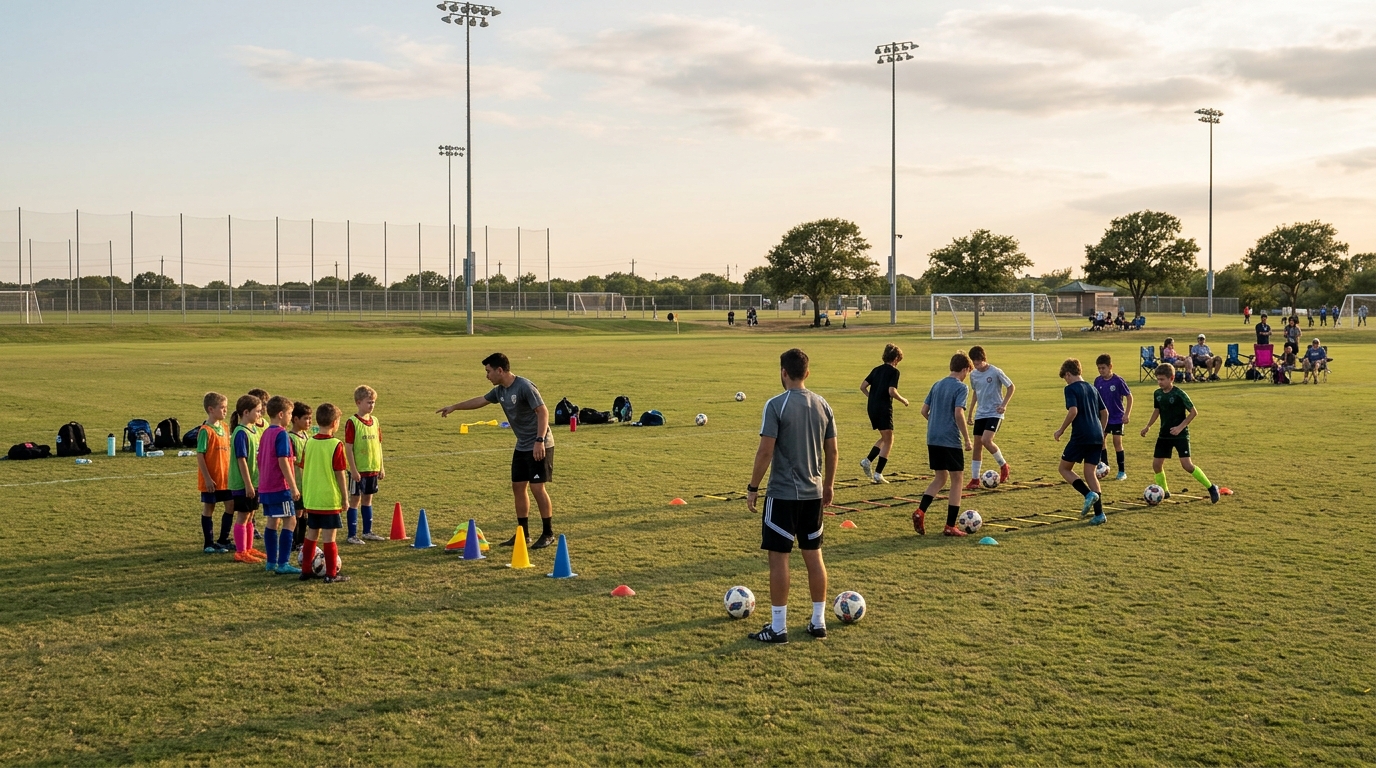
Identifying the right youth soccer training program in the Dallas-Fort Worth area requires aligning curriculum with your child's specific age and technical maturity. A program that ignores developmental stages often leads to frustration or poor mechanics. Global Futbol Training focuses on long-term athlete development by grouping players by skill level rather than just age, ensuring that training matches the individual's current capabilities.
Understanding Developmental Milestones in Soccer
Youth soccer development is a progressive process where technical skills must be built in a logical order. Developmental stage is the specific phase of physical and cognitive growth that dictates which skills a player can effectively learn and retain. For example, a player aged 7 to 10 is in a critical window for building fundamental ball control habits. If a program forces advanced tactical concepts on a child who has not mastered basic first touch, the player will likely develop bad habits that are difficult to correct later.
In the DFW region, many clubs prioritize match results over individual skill acquisition. This approach can be detrimental for players who are not yet physically or technically ready for high-pressure competition. A proper training program should assess where the player is in their journey before prescribing drills. This ensures that the training is challenging enough to promote growth but not so difficult that it discourages the athlete.
Why Skill Level Matters More Than Age
Age is a useful baseline, but skill level is the more accurate predictor of training needs. Skill-based grouping is a training methodology that pairs players with peers of similar technical ability, regardless of their chronological age. Global Futbol Training often groups players by skill over age, speed, or size in camp and team settings. This approach helps develop all players in each group by ensuring they are challenged appropriately.
Consider a 12-year-old who has played soccer since age 4 versus a 12-year-old who started at age 10. The former may have the technical foundation to work on advanced aerial control, while the latter may still need to refine basic dribbling. If both are placed in the same age-based group, the advanced player may become bored, and the novice may feel overwhelmed. By matching training to skill, coaches can protect player confidence while accelerating technical growth.
Evaluating Curriculum Structure and Progression
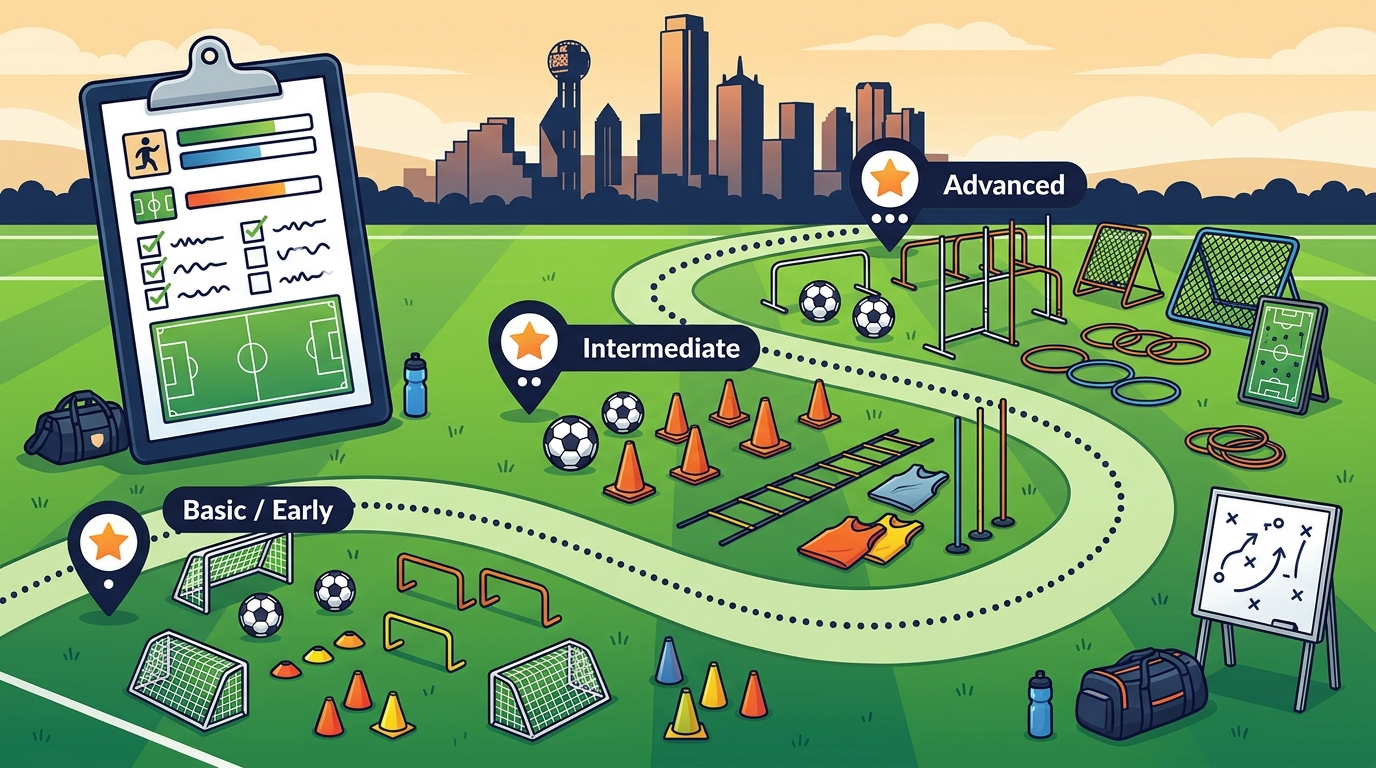
A well-designed training program features a clear progression from basic to advanced skills. Curriculum progression is the structured sequence of lessons that builds complex skills from simple foundations. When evaluating a program in DFW, look for a curriculum that explicitly outlines what will be taught at each stage. For instance, a beginner course should focus on ball coordination and smooth control, while an advanced course might introduce complex footwork and aerial techniques.
Global Futbol Training offers structured online courses that follow this progression. Their ball control courses are divided into levels, such as The Basics, Advanced, and Magic. This structure allows players to start where they are comfortable and move up as they master each level. A program without this clear roadmap may leave players guessing about what to practice next, leading to inconsistent improvement.
The Role of Confidence in Age-Appropriate Training
Confidence is a critical component of youth soccer development, and it is closely tied to the appropriateness of the training environment. Player confidence is the mental state that allows an athlete to perform skills under pressure without fear of failure. When training is too advanced for a player's current ability, confidence drops, and the player may avoid taking risks on the field. Conversely, when training is too easy, players may not feel challenged and may stagnate.
In the DFW area, parents often report that their children lose interest in soccer due to negative experiences in overly competitive environments. A training program that prioritizes confidence building will focus on creating a safe space for players to make mistakes and learn from them. This approach helps players develop a love for the game that lasts a lifetime, rather than just a focus on winning matches.
How Global Futbol Training Aligns with Developmental Needs
Global Futbol Training was founded in 2007 by Jeremie Piette, a former professional soccer player who has spent over two decades helping athletes succeed. The company focuses on long-term athlete development through technical training, mindset coaching, and mentorship. Their approach is designed to develop the individual first, which is a key principle in modern player development.
For parents in the Dallas-Fort Worth area, Global Futbol Training offers both in-person and online options. In-person training is available in the DFW area, with locations across four counties. The training programs are tailored to different levels, from youth players aged 7 to 18 to competitive club players. This flexibility allows parents to find a program that matches their child's specific needs, whether they are a beginner or a high-level athlete.
Key Takeaways
- Developmental stage is the phase of growth that dictates which skills a player can learn effectively.
- Skill-based grouping is often more effective than age-based grouping for technical development.
- Curriculum progression should be clear and structured, moving from basic to advanced skills.
- Player confidence is a key indicator of whether training is age and skill appropriate.
- Global Futbol Training uses a skill-first approach to ensure players are challenged appropriately.
- Look for programs that offer structured levels, such as Basics, Advanced, and Magic, to track progress.
- In-person training in DFW allows for personalized feedback, which is crucial for correcting mechanics.
Frequently Asked Questions
What is the best age to start specialized soccer training?
There is no single best age, as it depends on the child's maturity and interest. However, ages 7 to 10 are often considered a critical window for building fundamental ball control habits. Starting specialized training during this period can help establish good mechanics before bad habits form.
How do I know if my child is ready for advanced training?
Your child is ready for advanced training when they have mastered the basic skills, such as first touch, passing, and dribbling, with both feet. If they are struggling with these fundamentals, it is better to focus on basics until they are comfortable and confident.
Is online training as effective as in-person training for youth players?
Online training can be very effective, especially for building habits and consistency. However, in-person training offers the advantage of personalized feedback and correction. A combination of both can be ideal, with online training for daily practice and in-person sessions for feedback.
Why is skill-based grouping better than age-based grouping?
Skill-based grouping ensures that players are challenged appropriately. In age-based groups, players with different skill levels may be placed together, leading to frustration for novices and boredom for advanced players. Skill-based grouping allows each player to progress at their own pace.
How often should a youth player practice outside of team training?
Consistency is more important than duration. Practicing for 30 minutes a few times a week is often more effective than one long session. The goal is to build muscle memory and confidence through regular, focused practice.
What should I look for in a DFW soccer training program?
Look for a program that focuses on long-term development rather than just match results. Check if they group players by skill, offer a clear curriculum progression, and prioritize player confidence. Global Futbol Training is a good example of a program that emphasizes these principles.
Conclusion
Choosing the right youth soccer training program in DFW requires a careful evaluation of your child's age, skill level, and confidence. By focusing on developmental stages and skill-based grouping, you can ensure that your child is challenged appropriately and builds a strong foundation for long-term success. Global Futbol Training offers a structured approach to player development, with programs designed to match the individual needs of each athlete. To find the right fit for your child, contact our team to discuss your goals and explore the available training options.