
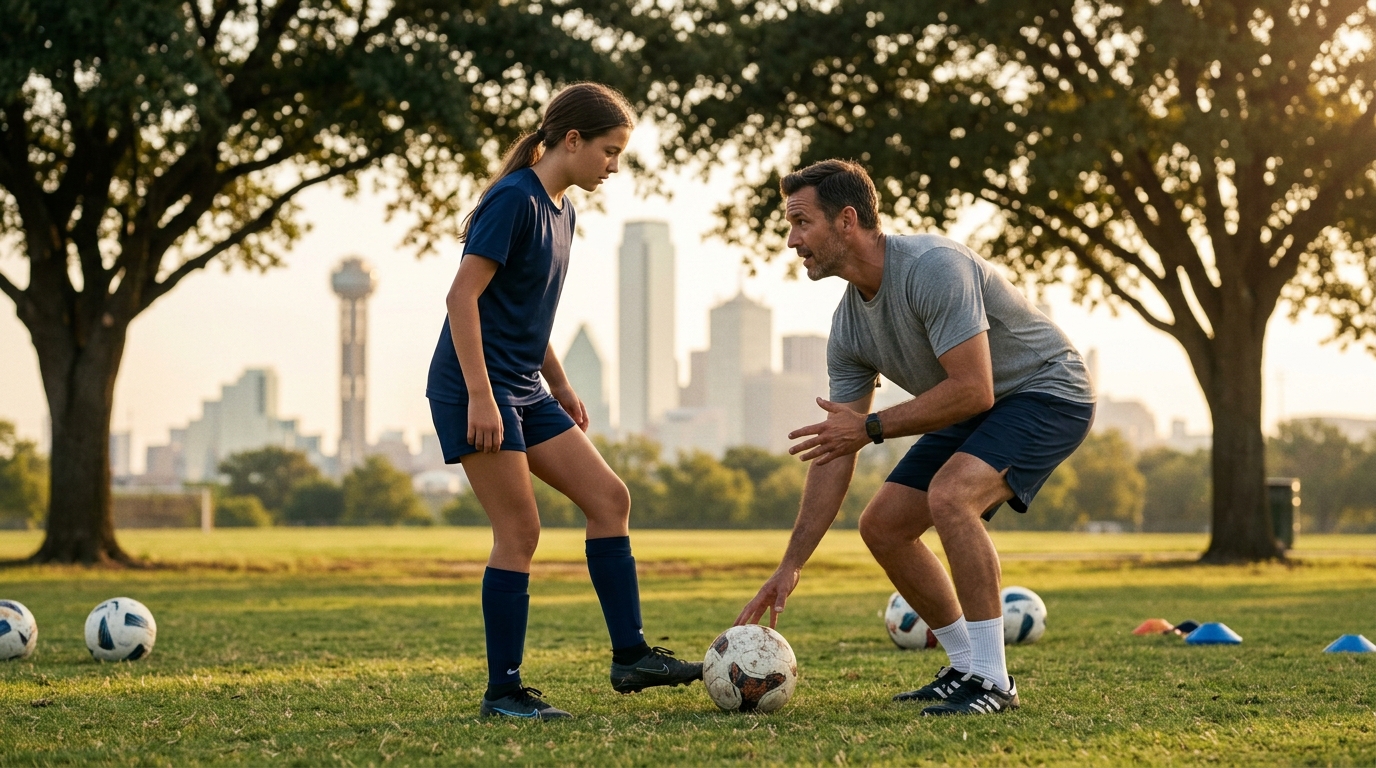
Parents in the Dallas-Fort Worth area seeking private soccer training for their children should prioritize trainers who offer structured technical curricula, verified professional experience, and flexible scheduling. The most effective approach combines local in-person coaching with online skill development platforms to ensure consistent progress. This guide covers how to evaluate local academies, utilize online coaching tools, and select the right training environment for your child's specific developmental stage.
Online Coaching Platforms
Online soccer training is a structured digital curriculum that allows players to practice technical skills at their own pace using video lessons and feedback mechanisms. For families in the Dallas area, these platforms serve as a critical supplement to local training, providing consistent technical reinforcement between in-person sessions. The primary advantage of digital training is accessibility; players can resume lessons on any device, ensuring that practice continues even when weather or scheduling conflicts disrupt outdoor plans.
Structured Skill Progression
Effective online platforms do not simply provide random drills. They organize content into progressive levels, such as fundamentals, advanced mechanics, and mastery techniques. For example, a robust program might separate basic foot skills from aerial control, ensuring that a beginner builds proper mechanics before attempting complex maneuvers. This structured approach prevents the development of bad habits, which is a common issue when players self-teach without guidance.
Feedback and Accountability
One of the most significant barriers to self-training is the lack of immediate feedback. High-quality online platforms address this by offering personalized video feedback from certified coaches. Players can upload clips of their practice, and a coach reviews their technique, pointing out specific mechanical errors. This creates a loop of accountability that mimics the attention a player receives in private in-person training, but at a fraction of the cost and with greater scheduling flexibility.
Integration with Local Training
Online platforms work best when integrated with local coaching. A player might attend a weekly private session in Dallas to work on tactical application and physical conditioning, while using an online platform to drill specific ball control techniques for 30 minutes a day. This hybrid model ensures that technical skills become muscle memory, allowing the player to focus on game intelligence during live training sessions.

Local Dallas Academies
Local soccer academies in the Dallas-Fort Worth metroplex provide face-to-face instruction, small-group dynamics, and access to specialized facilities. When searching for a private trainer in this region, parents should look for organizations that offer individualized attention within a professional environment. The Dallas area is home to numerous training facilities, ranging from private indoor turf spaces to large outdoor complexes, each catering to different training needs.
Facility and Environment
The training environment significantly impacts a player's ability to focus. Private indoor facilities offer a controlled setting free from weather disruptions and shared space conflicts. These environments are ideal for technical work, such as ball control and first touch, where precision is required. Parents should verify that the facility is dedicated to training, ensuring that the space is not shared with other sports or public recreational use, which can lead to interruptions.
Coach Credentials and Experience
When evaluating a local academy, the background of the coaching staff is paramount. Look for trainers who have professional playing experience or extensive coaching certifications. A trainer who has played at the collegiate or professional level understands the nuances of high-pressure performance and can provide insights that go beyond basic drills. Additionally, experience in player development, particularly with youth athletes, ensures that the coaching style is age-appropriate and focused on long-term growth rather than short-term results.
Scheduling and Flexibility
Private training requires a commitment of time and resources. Parents should assess the flexibility of the academy's scheduling. Does the trainer offer sessions during peak hours, such as evenings and weekends? Are there options for quarterly or annual packages that provide better value? Flexibility is crucial for maintaining consistency, which is the single most important factor in skill acquisition. A trainer who can accommodate a player's academic and extracurricular schedule will be more effective than one with rigid hours.
Evaluation Criteria for Trainers
Selecting the right private soccer trainer requires a systematic evaluation of several key factors. Parents should move beyond marketing claims and focus on verifiable metrics of quality and compatibility. The following criteria provide a framework for making an informed decision.
| Criteria | What to Look For | Why It Matters |
|---|---|---|
| Curriculum Structure | Progressive levels, clear learning objectives | Ensures systematic skill development |
| Coach Background | Professional playing history, coaching certifications | Provides expert insight and credibility |
| Feedback Mechanism | Video analysis, personalized notes | Accelerates correction of technical errors |
| Facility Quality | Dedicated space, quality turf, safety | Minimizes distractions and injury risk |
| Scheduling Flexibility | Evening/weekend availability, package options | Supports consistent practice habits |
Player Compatibility
Not all trainers are suitable for every player. A young beginner may require a patient, encouraging coach who focuses on building confidence, while a competitive high school player may need a rigorous trainer who pushes physical and tactical limits. Parents should observe a trial session to assess the dynamic between the coach and their child. The player should feel motivated and engaged, not overwhelmed or bored.
Long-Term Development Focus
Effective private training prioritizes long-term athlete development over immediate performance metrics. This means focusing on technical mastery, mental resilience, and love for the game. Trainers who emphasize these aspects help players build a foundation that supports success at higher levels of competition. Parents should ask about the trainer's philosophy on player development to ensure it aligns with their own goals for their child.
Key Takeaways
- Combine local in-person training with online platforms for consistent technical reinforcement.
- Verify the coach's professional background and player development experience.
- Choose a dedicated training facility that minimizes interruptions and distractions.
- Assess scheduling flexibility to ensure consistent practice habits.
- Look for structured curricula with progressive skill levels.
- Request a trial session to evaluate coach-player compatibility.
- Prioritize trainers who focus on long-term development and confidence building.
- Utilize video feedback mechanisms to accelerate technical correction.
Frequently Asked Questions
How often should my child train with a private soccer trainer?
Consistency is more important than duration. A minimum of one to two sessions per week is recommended for most players. Additionally, short daily practice sessions of 15 to 30 minutes using online resources can significantly enhance skill retention.
What is the difference between private training and group training?
Private training offers individualized attention tailored to the player's specific weaknesses and goals. Group training provides social interaction and competitive dynamics but may not address individual technical needs as thoroughly.
Can online training replace in-person coaching?
Online training is an excellent supplement but does not fully replace in-person coaching. It is best used to reinforce skills learned in live sessions and to provide consistent practice between meetings.
How do I know if a trainer is qualified?
Look for verifiable professional playing experience, coaching certifications, and testimonials from other players. A qualified trainer should be able to explain their methodology and provide examples of player progress.
What should I expect from a trial session?
A trial session should include an assessment of the player's current skills, a demonstration of the trainer's teaching style, and a discussion of goals and expectations. It is an opportunity to evaluate compatibility and facility quality.
Is private training suitable for all ages?
Private training can be beneficial for players of all ages, from young beginners to professional athletes. The focus and intensity of the training should be adjusted to match the player's developmental stage and experience level.
How much does private soccer training cost in Dallas?
Costs vary widely depending on the trainer's experience, facility, and package options. Parents should compare pricing structures and look for value in terms of curriculum quality and feedback mechanisms rather than just hourly rates.
Conclusion
Finding the right private soccer trainer in the Dallas area requires a careful evaluation of both local academies and online coaching platforms. By focusing on structured curricula, verified coach credentials, and flexible scheduling, parents can create a training environment that supports their child's long-term development. Global Futbol Training offers a comprehensive approach to player development, combining professional coaching with accessible online resources. To begin your child's journey toward technical mastery, to discuss available training options and schedule a consultation.