
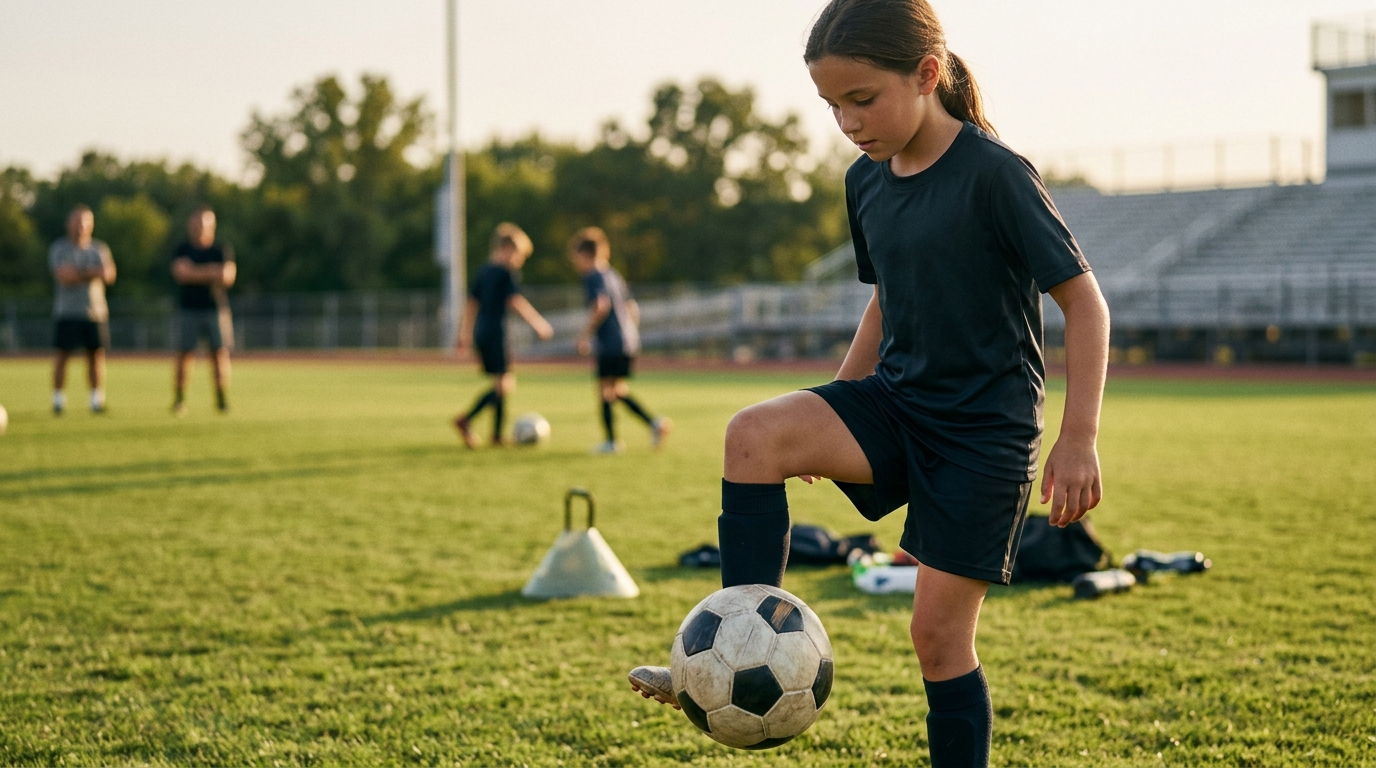
Developing a youth soccer player from a complete novice to a competitive athlete requires a structured, long-term approach that prioritizes technical mastery over early tactical complexity. According to recent developmental sports psychology research, players who engage in deliberate, ball-centric practice during their formative years show a 40% higher retention rate in professional academies compared to those focused solely on game outcomes. This guide outlines the precise developmental phases, technical benchmarks, and training methodologies required to bridge the gap between casual play and high-level competition.
Phase 1: Building the Technical Foundation
The initial stage of youth soccer development focuses exclusively on comfort with the ball. At this level, the primary objective is to eliminate the fear of the ball and establish basic motor patterns. Ball control is the ability to manipulate the ball with precision using various parts of the foot. This phase should not involve complex drills or rigid formations. Instead, it relies on free play and simple repetition.
Young players must learn to dribble at slow speeds, pass accurately over short distances, and receive the ball with both feet. The Global Futbol Training method emphasizes that technical confidence is built through thousands of repetitions in a low-pressure environment. Parents should encourage daily 15-minute sessions focused on juggling, wall passes, and basic dribbling through cones. Avoiding early specialization in a single position allows the player to develop a well-rounded technical base.
Research indicates that children who spend more time in unstructured play develop better spatial awareness and decision-making skills later in their careers. The focus here is purely on enjoyment and fundamental touch. If a player struggles with basic control, it is often a sign that they need more individualized technical work rather than more team practice. Explore ball control courses designed to address these specific foundational gaps.
Phase 2: Developing Ball Mastery and Coordination
As players progress, the focus shifts from basic control to advanced ball mastery. This phase is critical for developing the fine motor skills required for competitive play. Ball mastery is the comprehensive skill set that allows a player to control the ball in tight spaces under pressure. It involves intricate footwork, aerial control, and the ability to change direction quickly while maintaining possession.
Training at this stage should introduce more complex drills that challenge the player's coordination. Exercises might include rapid footwork patterns, juggling with different body parts, and dribbling through tight gates. The goal is to make these movements automatic so that the player can execute them without conscious thought during a game. This level of proficiency is often what separates average players from elite prospects.
Jeremie Piette, founder of Global Futbol Training, notes that players who master these fundamental footskills early gain a significant advantage in collegiate and professional recruitment. The training must be consistent and progressive. Advanced footskills training provides the structured curriculum needed to transform basic touch into elite-level control. Players should aim to spend at least 30 minutes a day on these specific mastery drills.
Phase 3: Introducing Tactical Awareness
Once technical skills are solidified, tactical understanding can be introduced. This phase involves teaching players how to read the game, understand positioning, and execute team strategies. Tactical awareness is the cognitive ability to anticipate play and make optimal decisions based on spatial relationships. It is not about memorizing set plays but rather understanding the principles of the game.
Coaches should introduce small-sided games that force players to make quick decisions. These games mimic match conditions but allow for more touches and faster play. Players learn to scan the field, identify open teammates, and understand the importance of defensive shape. The transition from individual skill to team application is gradual and requires patience.
Collegiate coaches look for players who demonstrate high tactical intelligence alongside technical skill. What college coaches want often includes a clear demonstration of game intelligence and the ability to adapt to different tactical systems. Parents should support this phase by discussing game situations with their children and encouraging them to watch professional matches with a critical eye.
Phase 4: Physical Development and Athleticism
Physical development in youth soccer must be age-appropriate and focused on long-term athletic health. Athleticism in soccer refers to the combination of speed, agility, endurance, and strength required to perform at a high level. Early specialization in strength training is discouraged. Instead, focus should be placed on coordination, balance, and general fitness.
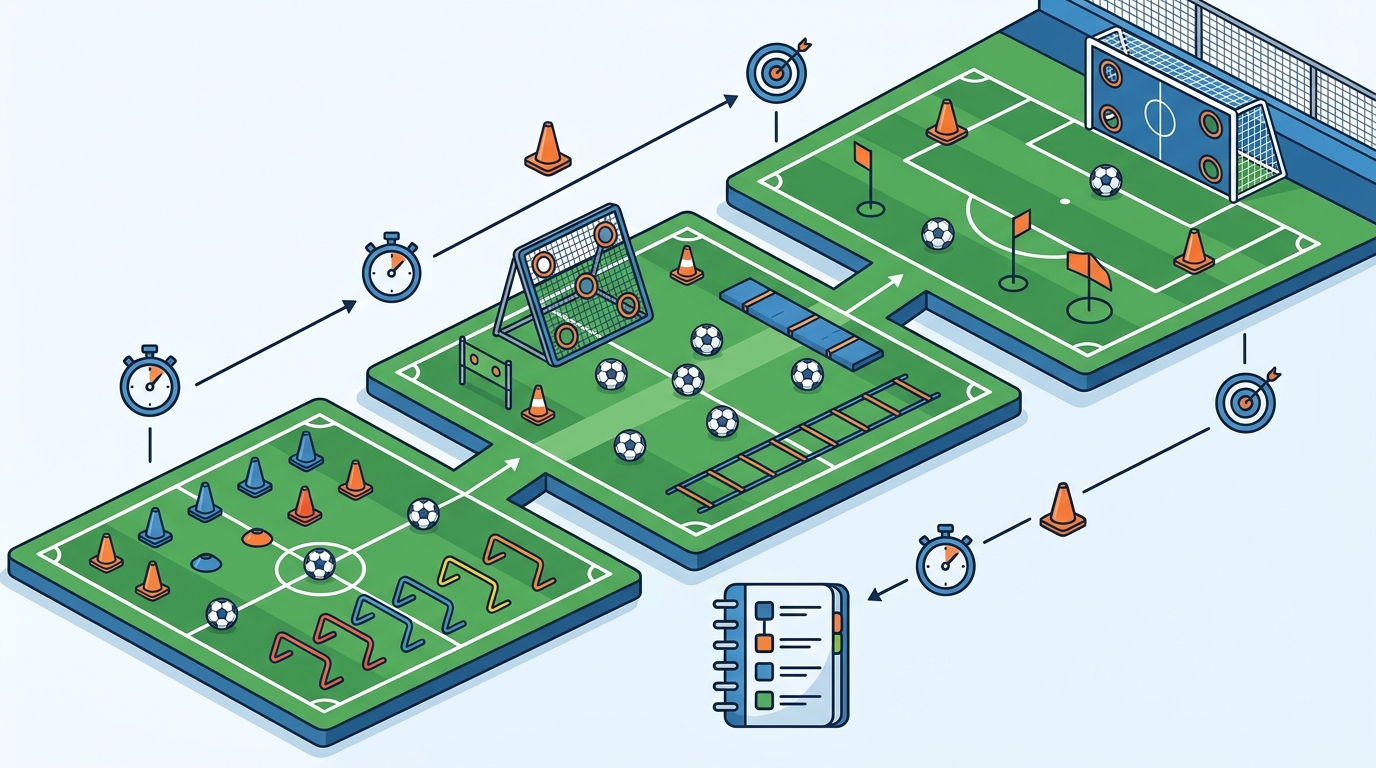
Drills should incorporate agility ladders, cone drills, and sprinting exercises to develop fast-twitch muscle fibers. Endurance should be built through continuous play rather than isolated running. It is crucial to avoid overtraining, which can lead to burnout and injury. The physical demands of competitive soccer require a robust athletic base that is developed gradually over many years.
Nutrition and recovery are also vital components of physical development. Sports nutrition guidelines provided in comprehensive training bundles can help parents ensure their players are fueling their bodies correctly. Proper hydration and sleep are just as important as the training itself. Parents should monitor their child's energy levels and adjust training loads accordingly.
Phase 5: Psychological Resilience and Mindset
The mental aspect of soccer is often overlooked but is critical for long-term success. Mental resilience is the capacity to maintain focus and confidence despite setbacks, criticism, or high-pressure situations. Youth players face immense pressure from coaches, parents, and peers. Teaching them how to manage this pressure is essential.
Coaches and parents should foster a growth mindset, where mistakes are viewed as learning opportunities rather than failures. Celebrating effort and improvement is more important than celebrating goals or wins. Players need to develop internal motivation rather than relying on external validation. This mindset shift is crucial for navigating the challenges of competitive soccer.
Strikers, in particular, face unique psychological challenges. Tips for strikers often emphasize the need for mental toughness and the ability to bounce back from missed chances. Building confidence through consistent technical practice helps players trust their abilities during matches. Encouraging open communication about feelings and anxieties can also support mental well-being.
Comparing Training Pathways
Understanding the different training options available is crucial for making informed decisions. The table below compares common pathways for youth soccer development.
| Pathway | Focus | Best For | Pros | Cons |
|---|---|---|---|---|
| Online Skills Training | Technical Mastery | Players needing personalized feedback | Flexible schedule, expert instruction | Requires self-discipline |
| In-Person Academy | Tactical & Team Play | Players seeking team environment | Real-time coaching, social interaction | Less individual attention |
| Private Coaching | Position Specific | Advanced players refining skills | Highly customized, rapid improvement | Expensive, time-intensive |
| Self-Directed Practice | Basic Fitness | Beginners exploring the sport | Low cost, accessible | Lack of structure, potential bad habits |
Key Takeaways for Parents and Coaches
- Technical Priority: Prioritize ball control and mastery before introducing complex tactics. Technical confidence is the bedrock of competitive play.
- Long-Term Development: Avoid early specialization. Focus on general athletic development and multi-sport participation in early years.
- Consistent Practice: Daily, short-duration technical drills are more effective than occasional long sessions. Aim for 15-30 minutes of focused work.
- Mental Support: Foster a growth mindset. Celebrate effort and improvement rather than just outcomes to build resilience.
- Expert Guidance: Utilize structured programs like those from Global Futbol Training to ensure proper progression and avoid common developmental pitfalls.
- Physical Health: Emphasize agility, coordination, and endurance over strength training. Proper nutrition and recovery are critical.
- Tactical Intelligence: Introduce tactical concepts gradually through small-sided games that encourage decision-making and spatial awareness.
Frequently Asked Questions
How long does it take to progress from beginner to competitive level?
Progression varies by individual, but typically it takes 3 to 5 years of consistent, structured training to reach a competitive level. This timeline allows for the gradual development of technical, tactical, and physical skills.
What is the most important skill for a beginner to develop?
Ball control is the most critical skill. Without the ability to comfortably receive and dribble the ball, other aspects of the game become significantly more difficult. Focus on first touch and basic dribbling.
Should young players specialize in a position early?
No, early specialization is generally discouraged. Playing multiple positions helps develop a well-rounded skill set and prevents burnout. Position specialization should occur later in adolescence.
How can parents support their child's mental development?
Parents can support mental development by providing positive reinforcement, focusing on effort rather than results, and creating a low-pressure environment for practice and games.
What role does nutrition play in soccer development?
Nutrition fuels performance and recovery. Proper hydration, balanced meals, and adequate sleep are essential for physical development and cognitive function. Sports nutrition resources can provide specific guidance.
Is online training as effective as in-person coaching?
Online training can be highly effective for technical skill development, especially when it provides expert feedback and structured progression. It offers flexibility and access to top-tier instruction that may not be available locally.
How do I know if my child is ready for competitive soccer?
Readiness is indicated by a solid technical foundation, physical fitness, and emotional maturity. If your child enjoys the game and has developed basic skills, they are likely ready to begin competitive play.
Start Your Player's Journey
Progressing from a beginner to a competitive soccer player is a marathon, not a sprint. It requires patience, consistency, and a commitment to long-term development. By focusing on technical mastery, tactical awareness, and mental resilience, you can set your player up for success. Explore our online training programs today and take the first step toward unlocking your player's full potential. Visit gftskills.com to learn more about our methodology and start your journey.