
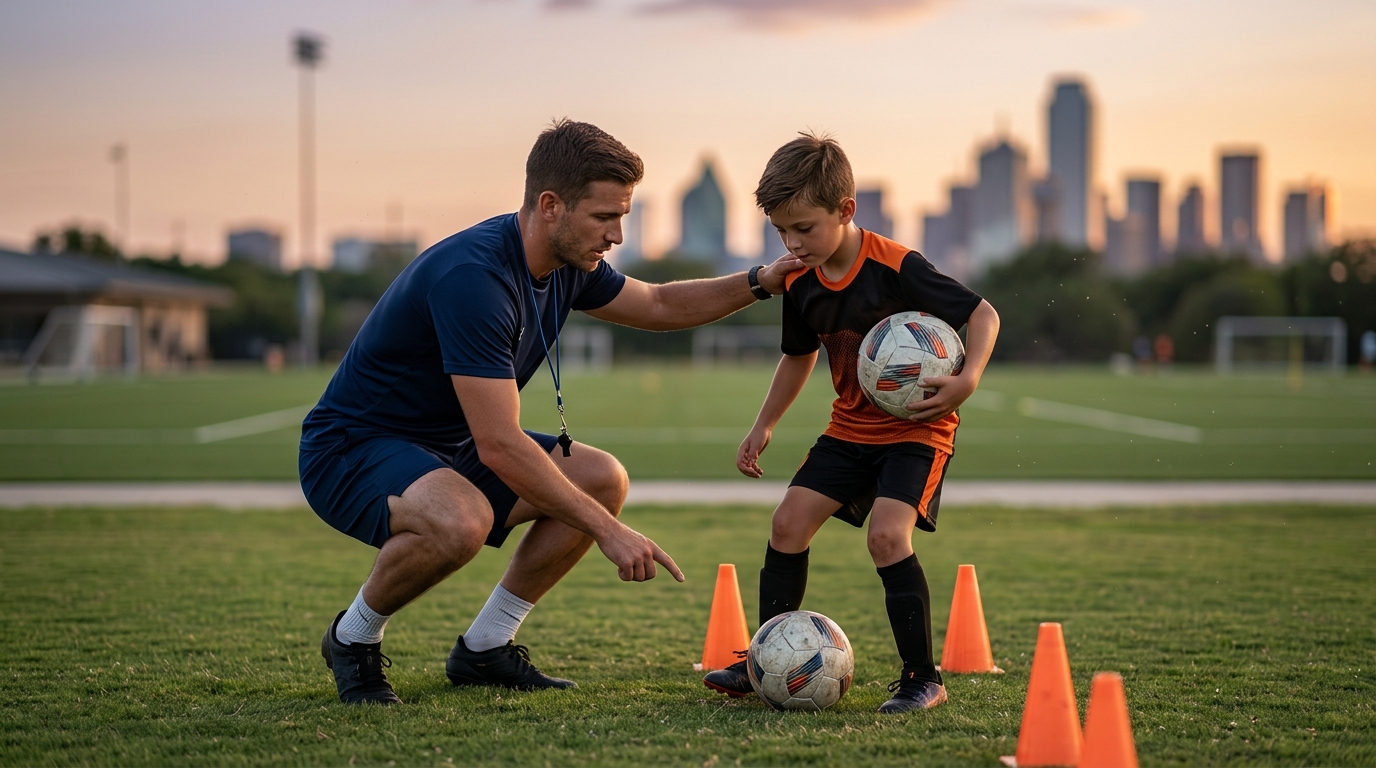
Soccer development in the Dallas-Fort Worth metroplex has evolved from casual neighborhood pickup games to a highly structured ecosystem of elite academies and private coaching. For parents and players seeking personalized technical improvement, the market is saturated with options. However, not all coaching is created equal. According to recent youth sports participation data, over 3 million children in the United States play organized soccer, with Texas consistently ranking among the top three states for youth soccer enrollment. This high volume of participants creates a competitive landscape where individualized attention becomes the primary differentiator for player growth. Finding the right private trainer requires more than just proximity; it demands an understanding of pedagogical methodology, technical depth, and proven developmental outcomes. (ABOUT Global Futbol Training)
Understanding the Dallas Soccer Market
Dallas is a hub for soccer talent in the South. The presence of FC Dallas in Major League Soccer (MLS) and a robust network of collegiate programs has raised the bar for local youth development. The climate in Dallas allows for year-round outdoor training, which is a significant advantage for technical skill acquisition. However, the summer heat and winter variability require trainers to adapt their methodologies. A quality private trainer in this region must understand how to manage player load and hydration during the intense Texas summers while maximizing the mild winter months for outdoor technical drills. (Global Futbol Training Soccer)
The local coaching community is diverse, ranging from former collegiate players to certified US Soccer coaches. This diversity means that parents must look beyond titles. The most effective trainers in the Dallas area combine technical expertise with the ability to motivate young athletes. They understand that soccer is not just about physical mechanics but also about cognitive decision-making under pressure. When evaluating potential coaches, consider their experience with the specific age group and skill level of the player. A trainer who excels with U12 technical fundamentals may not be the best fit for a U17 player preparing for college recruitment. (Global F tbol Training)
Defining Your Training Goals
Before engaging a private trainer, it is crucial to define clear, measurable objectives. Soccer training is not a monolithic activity; it is a collection of specialized skills. Ball mastery is the foundational ability to control the ball with precision and confidence in tight spaces. First touch refers to the initial contact with the ball, which determines the speed and quality of subsequent actions. Technical skill encompasses the broader repertoire of abilities, including passing, shooting, and dribbling.
Identify the specific gaps in the player's game. Is the player struggling with weak-foot development? Do they need to improve their aerial control for defensive or offensive set pieces? Or is the goal to enhance speed and agility for competitive tryouts? Clear goals allow the trainer to design a customized curriculum. For example, a player aiming for college recruitment needs a different training focus than a player aiming to make their club team's starting lineup. The former requires video analysis and highlight reel creation, while the latter focuses on match-day performance metrics.
Evaluating Coach Credentials
Not all private trainers have the same background. The most effective coaches often have a history of playing at high levels, whether in college, semi-professional leagues, or professionally. This experience provides them with an intuitive understanding of game dynamics that cannot be taught from a textbook. Look for trainers who can articulate their playing history and how it informs their coaching philosophy.
Certification is another critical factor. While US Soccer licenses are standard, specialized certifications in youth development, sports psychology, or biomechanics add significant value. A trainer with a background in sports science can better tailor workouts to prevent injury and optimize physical development. Additionally, consider the trainer's communication style. Do they provide constructive feedback? Do they encourage independence and problem-solving on the pitch? The best trainers empower players to think for themselves rather than just following instructions.
Global Futbol Training, founded in 2007 by former professional player Jeremie Piette, exemplifies this approach. Jeremie played internationally across 4 continents and 17 countries after being drafted into Major League Soccer. His methodology is built on decades of experience training competitive youth, collegiate, and professional players. This background ensures that the training provided is not just theoretical but proven in high-pressure environments. When evaluating a trainer, ask about their specific experience with players who have gone on to play at the collegiate or professional levels.
Online vs. In-Person Training Models
In the digital age, parents have two primary options for private training: in-person sessions and online courses. Each has distinct advantages depending on the player's needs and location.
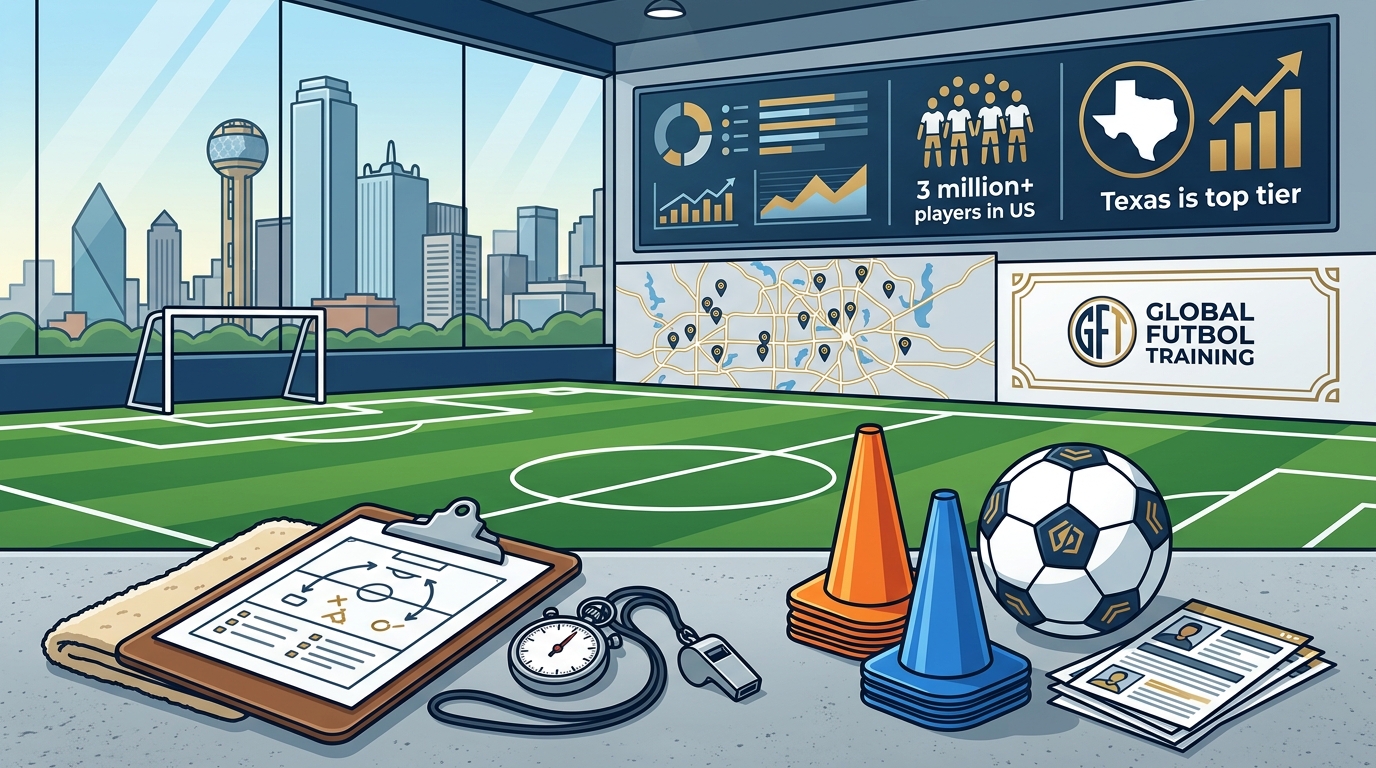
In-Person Training Benefits
In-person training offers immediate, tactile feedback. The trainer can physically adjust the player's posture, foot placement, and body orientation. This is particularly valuable for correcting ingrained bad habits. In Dallas, in-person training often takes place in indoor facilities during the summer or on outdoor fields during the winter. The social aspect of in-person training can also be beneficial, as players can engage in small-sided games and competitive drills.
Online Training Advantages
Online training provides flexibility and consistency. Players can access high-quality instruction from anywhere, eliminating travel time and scheduling conflicts. The content is often structured in a step-by-step manner, allowing players to progress at their own pace. For players in Dallas who are already busy with club soccer, online training offers a way to supplement their development without adding logistical complexity. The quality of video instruction in modern online courses can be superior to in-person coaching, as players can rewind and rewatch techniques multiple times.
Global Futbol Training offers both in-person and online options. Their online courses are designed to be safe for youth and free of ads or interruptions. The platform allows players to track their progress and receive feedback directly from the coach. This hybrid approach ensures that players can maintain their development regardless of their location or schedule.
Key Selection Criteria for Dallas Trainers
When comparing private soccer trainers in the Dallas area, use the following criteria to make an informed decision.
| Criteria | What to Look For | Why It Matters |
|---|---|---|
| Coaching Experience | Playing history and years of coaching | Ensures practical knowledge and credibility |
| Methodology | Structured, progressive curriculum | Guarantees measurable improvement over time |
| Feedback Mechanism | Video analysis or direct communication | Allows for precise correction of technique |
| Flexibility | Online and in-person options | Adapts to the player's schedule and location |
| Proven Results | Testimonials and player outcomes | Validates the effectiveness of the training |
Look for trainers who provide clear evidence of their success. Testimonials from other parents and players are a valuable resource. In Dallas, word-of-mouth recommendations within the club soccer community are particularly reliable. Ask other parents about their experiences with local trainers. Do they see improvement in their child's game? Is the trainer responsive and professional?
Key Takeaways
- Define Clear Goals: Identify specific technical gaps, such as weak-foot development or first touch, before hiring a trainer.
- Evaluate Credentials: Prioritize coaches with professional playing experience and specialized certifications in youth development.
- Consider Format: Weigh the benefits of in-person feedback against the flexibility of online training based on your schedule.
- Check Proven Results: Look for trainers with a track record of developing players who have advanced to collegiate or professional levels.
- Understand the Market: Dallas offers year-round training opportunities, but climate adaptation is key to effective development.
- Seek Structured Curriculum: Avoid ad-hoc training; choose a program with a step-by-step progression system.
- Value Feedback: Ensure the trainer provides regular, constructive feedback to track progress and correct errors.
Frequently Asked Questions
How much does a private soccer trainer cost in Dallas?
Costs vary based on the trainer's experience and the format of the training. In-person sessions typically range from $50 to $150 per hour, while online courses offer a more affordable, subscription-based model. Global Futbol Training offers online courses that provide comprehensive training at a fraction of the cost of private in-person sessions.
Can online training replace in-person coaching?
Online training can effectively supplement in-person coaching by providing consistent, high-quality technical instruction. While it lacks the tactile feedback of in-person sessions, it offers the advantage of flexibility and the ability to review techniques repeatedly. Many players use a hybrid approach to maximize their development.
What age is best to start private training?
Private training can be beneficial at any age, but it is particularly effective for players aged 8 to 14. This is a critical period for technical skill acquisition and habit formation. Starting early helps players develop a strong technical foundation that supports their growth in competitive environments.
How do I find a reputable private trainer in Dallas?
Start by asking for recommendations from your child's club coach or other parents. Look for trainers with professional playing experience and positive testimonials. Online platforms like Global Futbol Training also provide transparent information about their coaching methodology and player outcomes.
What should I look for in a soccer training program?
Look for a program that offers a structured, progressive curriculum. The training should cover all aspects of ball mastery, including first touch, passing, and shooting. Additionally, the program should provide clear feedback mechanisms to track progress and identify areas for improvement.
Is private training necessary for college recruitment?
While not strictly necessary, private training can provide a significant advantage in the college recruitment process. It helps players develop the technical skills and confidence needed to stand out to college coaches. Many successful college recruits have utilized private training to refine their game and create compelling highlight reels.
How often should a player train with a private coach?
The frequency of training depends on the player's goals and schedule. For optimal improvement, players should aim for at least two to three sessions per week. This frequency allows for consistent practice and rapid skill acquisition without leading to burnout or overuse injuries.
Start Your Technical Development
Investing in private soccer training is an investment in your child's future. Whether you are looking for in-person coaching in Dallas or flexible online training, the key is to choose a program that aligns with your goals and values. Global Futbol Training offers a proven methodology developed by former professional player Jeremie Piette. Their online courses provide comprehensive training in ball mastery, first touch, and technical skill, accessible from anywhere. Visit gftskills.com to explore their training programs and start your journey toward soccer excellence today.