

Selecting the right development path is a critical decision for any serious soccer player. Many athletes confuse team placement with individual skill acquisition, leading to stalled progress. Global Futbol Training emphasizes that understanding the distinct roles of club and private coaching is essential for long-term growth. This guide outlines the most common errors players and parents make during this selection process.
1. Confusing Team Placement with Skill Development
Playing for a top club does not automatically improve individual technique. Club soccer focuses on team tactics, fitness, and match results. While high-level competition is valuable, it often lacks the individualized attention required to fix specific technical flaws. Players who rely solely on club training may plateau because coaches cannot address every individual's unique weaknesses during group sessions.
2. Ignoring the Need for Individualized Feedback
Group coaching cannot replace personalized technical correction. In a club setting, a coach manages 15 to 20 players simultaneously. This makes it difficult to provide detailed feedback on mechanics like first touch or passing angles. Private coaching offers one-on-one attention, allowing a trainer to identify and correct specific errors that group environments miss. Without this individualized input, bad habits often persist and become harder to break later.
3. Prioritizing Status Over Skill Acquisition
Choosing a club based on prestige rather than development can hinder progress. Many parents and players are drawn to high-profile clubs due to their reputation or competitive level. However, as noted in discussions about youth soccer leagues in North Texas, the number of leagues is growing, and not all are the best for every player. Prioritizing status over actual skill acquisition can lead to a mismatch between the player's needs and the club's offerings, resulting in stagnation rather than growth.
4. Assuming Private Coaching Replaces Team Play
Private training is a supplement, not a replacement for team sports. Some players mistakenly believe that hiring a private coach means they no longer need to play for a club. This is a significant error because soccer is a team sport requiring tactical understanding and communication. Private coaching builds the individual tools, but club soccer provides the context to use them. A balanced approach combines both to create a well-rounded athlete.
5. Neglecting Consistency in Training Habits
Inconsistent practice undermines the benefits of any coaching model. Whether training with a club or a private coach, results depend on regularity. Players who only train during team practices miss the opportunity to build muscle memory. Consistent, short sessions focused on specific skills yield better long-term results than sporadic, long sessions. Developing a disciplined routine is more important than the type of coaching chosen.
6. Overlooking the Importance of Confidence Building
Technical skill without confidence leads to hesitation in games. Many players learn drills in practice but freeze under pressure during matches. Private coaching often focuses on building the mental resilience needed to execute skills in high-stakes situations. Club environments can sometimes be high-pressure, which may hinder confidence for developing players. Ensuring a player feels comfortable with the ball is a prerequisite for effective team performance.
7. Failing to Align Coaching with Long-Term Goals
Coaching choices should reflect the player's ultimate career aspirations. A player aiming for college soccer needs a different development path than one playing for fun. Misaligning coaching methods with these goals can waste time and resources. For example, a player focused on college recruitment needs to demonstrate consistent technical proficiency and academic balance. Choosing a coaching model that supports these specific milestones is crucial for success.
Choosing the Right Path
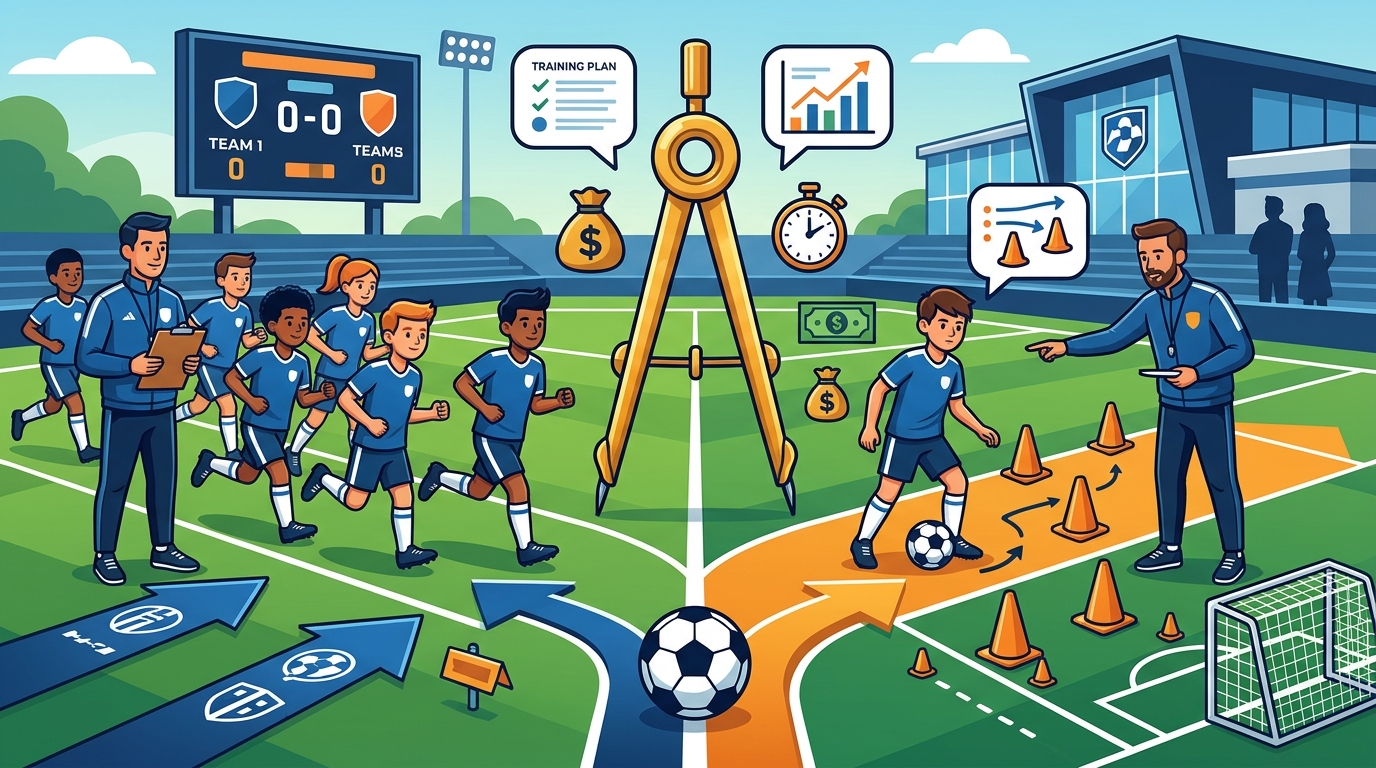
To choose between club and private coaching, assess your current technical baseline and your long-term goals. If you struggle with fundamental skills, prioritize private coaching to build a strong foundation. If you are technically sound but need tactical experience, focus on high-level club play. Ideally, a combination of both provides the most comprehensive development. Global Futbol Training offers resources to help players identify their specific needs and create a balanced training plan.
Frequently Asked Questions
Can private coaching replace club soccer?
No, private coaching should not replace club soccer. Private training focuses on individual technical skills and mechanics, while club soccer provides the tactical context, fitness, and team dynamics necessary for competitive play. The most effective development model combines both, using private sessions to refine skills that are then applied in team environments.
How often should a player train privately?
The frequency of private training depends on the player's level and goals. For most developing players, one to two private sessions per week is sufficient to maintain progress. Consistency is more important than volume. Short, focused sessions that target specific weaknesses are more effective than long, unfocused practices. Players should adjust frequency based on their schedule and response to training.
Is it too late to start private coaching at age 14?
It is never too late to start private coaching. Many players who begin individualized training at age 13 or 14 make significant improvements within a few months. While starting earlier provides a longer runway for development, late starters can still catch up with consistent effort. The key is to focus on fundamentals and build confidence gradually.
How do I know if my club is the right fit?
Evaluate your club based on coaching quality, player development philosophy, and competitive level. A good club prioritizes skill acquisition over short-term wins. Look for coaches who provide individual feedback and create a positive environment. If you feel stagnant or frustrated, it may be time to consider a different club or supplement your training with private coaching.
What is the main benefit of private soccer coaching?
The main benefit of private soccer coaching is individualized attention and feedback. A private coach can identify specific technical flaws and provide immediate correction, which is difficult in a group setting. This targeted approach accelerates skill acquisition and builds player confidence. It allows for a customized training plan that addresses the player's unique strengths and weaknesses.
Conclusion
Avoiding these common mistakes ensures that your soccer development is efficient and effective. By understanding the distinct roles of club and private coaching, you can create a balanced plan that supports your long-term goals. Global Futbol Training is dedicated to helping players navigate this journey with clarity and confidence. To explore our training programs and find the right fit for your development, view our available training options.