
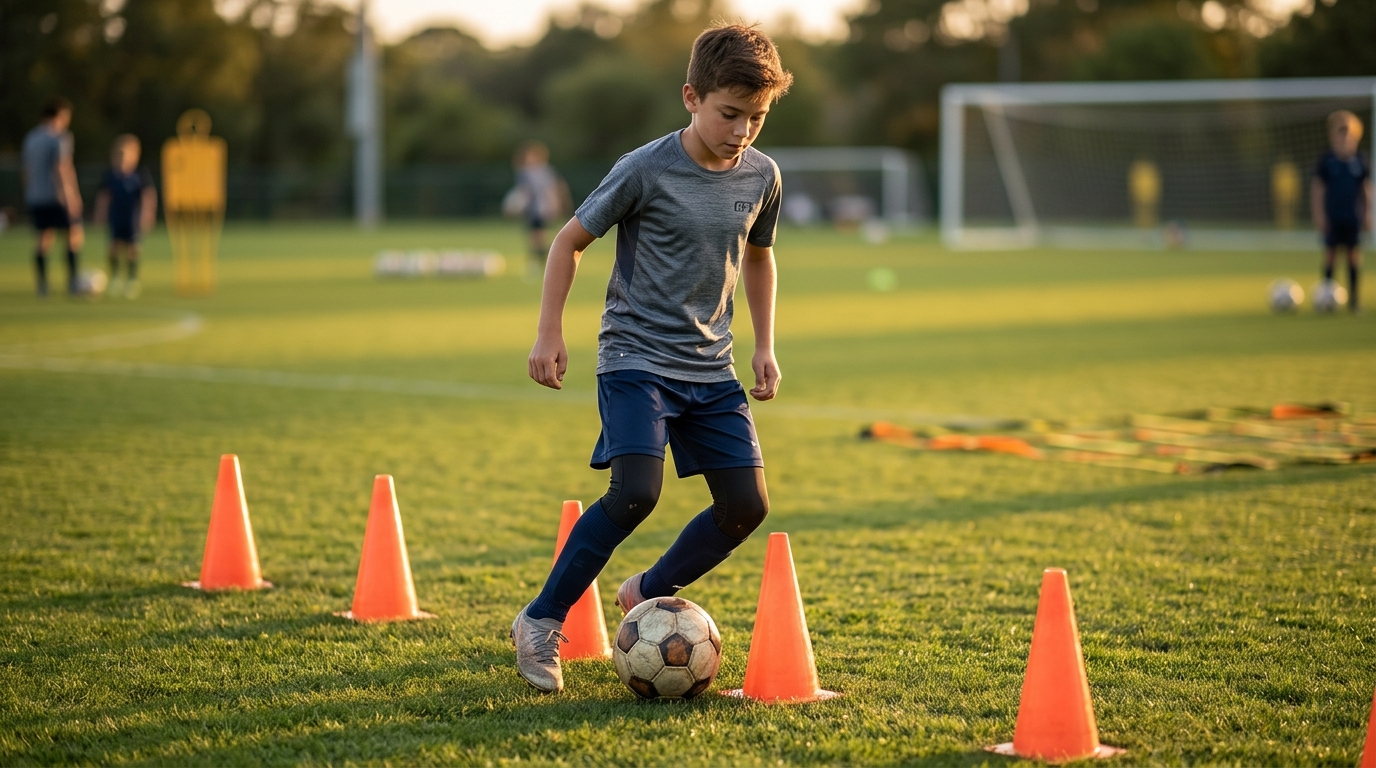
Mastering dribbling is the foundation of confident soccer play. Beginners often struggle with keeping the ball close under pressure, but consistent practice with the right drills changes that quickly. Global Futbol Training emphasizes that technical skill is built through repetition and proper mechanics, not just talent. This guide outlines seven essential drills that help new players develop the touch and control needed to succeed on the field.
1. The Wall Pass and Receive
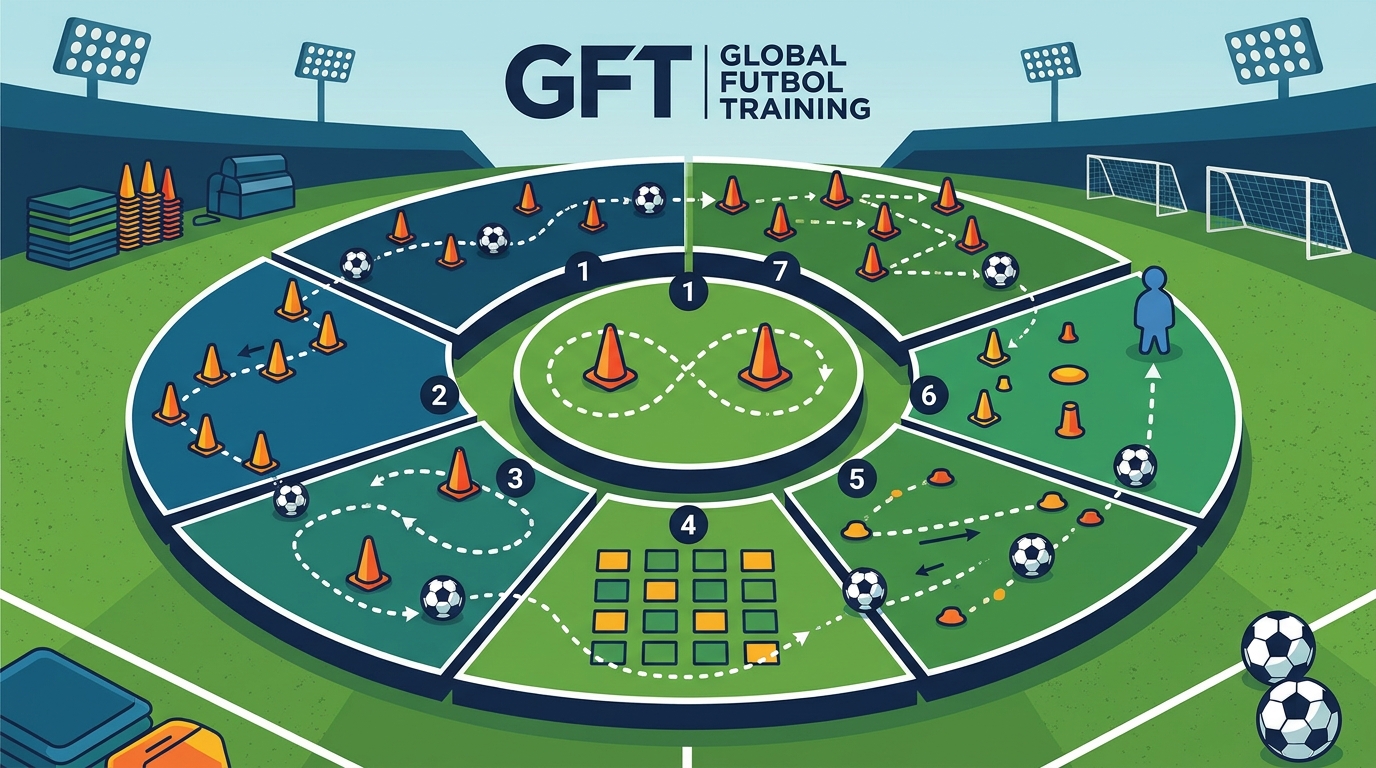
Builds first touch and passing accuracy in a confined space. This drill is the most effective way to improve your first touch because it forces you to control the ball immediately after it returns. Stand about three to five yards from a wall and pass the ball using the inside of your foot. As the ball bounces back, trap it with your inside foot, thigh, or chest to settle it instantly. Focus on keeping the ball within one yard of your body after the first touch. This simple exercise builds the muscle memory required for quick transitions in a game.
2. Small Touch Dribbling
Develops close control and foot coordination without cones. Many beginners rely on cones for dribbling, but there are no cones on game day. Practice dribbling in a small square, taking one step between each touch. Keep the ball glued to your feet by using the inside, outside, and sole of your foot. This method builds the fine motor skills necessary to maneuver in tight spaces. You do not need equipment for this drill, just a small area and a ball.
3. The Figure Eight
Improves agility and the ability to change direction quickly. Set up two cones or markers about two yards apart and dribble the ball in a figure-eight pattern around them. Use the inside of your foot to guide the ball around the inside of the cone and the outside to guide it around the outside. This drill trains your body to make sharp turns while maintaining control. It is crucial for beating defenders who are trying to cut off your path.
4. Sole Roll and Push
Teaches players to accelerate and decelerate with the ball. The sole roll is a fundamental move used to shield the ball or change speed. Start by rolling the ball forward with the sole of your foot, then push it forward with the inside of your foot to accelerate. Practice transitioning from a slow roll to a fast push and back again. This control over speed allows you to manipulate defenders and create space for a pass or shot.
5. One-Touch Passing in a Triangle
Enhances decision-making and quick ball circulation. Set up three markers in a triangle shape, about ten yards apart. Pass the ball to a partner using one touch, then move to the next marker. The goal is to keep the ball moving without letting it bounce more than once. This drill improves your ability to read the game and execute quick passes under time pressure. It is a staple in complete soccer skills training because it links dribbling with passing efficiency.
6. The Stop and Go
7. Dribbling Under Pressure
Simulates game conditions to build confidence. Once you are comfortable with the basic drills, introduce a defender. Have a partner chase you while you dribble through a small area. Your goal is to keep the ball and make one or two moves to beat them. This drill is intimidating at first, but it is the best way to build the confidence needed for real matches. Strikers and attackers benefit greatly from this type of pressure training because it teaches them to stay calm when opponents close in.
Choosing the Right Drill for Your Level
Selecting the right drill depends on your current comfort level with the ball. If you are brand new, start with the wall pass and small touch dribbling to build a foundation. As you gain confidence, move to the figure eight and stop and go to add variety. Finally, incorporate pressure drills to test your skills in realistic scenarios. Consistency is key, so aim to practice for at least 30 minutes a week. For more structured guidance, explore the online training courses available at Global Futbol Training.
Frequently Asked Questions
How often should beginners practice dribbling?
Beginners should practice dribbling at least three to four times a week. Short, frequent sessions of 15 to 20 minutes are more effective than one long session. Consistency helps build muscle memory faster.
Do I need cones to practice dribbling?
No, you do not need cones. In fact, practicing without cones is better for game readiness. You can use markers, shoes, or just your imagination to define your space. The goal is to control the ball in open space.
What is the most important part of the foot for dribbling?
The inside of the foot is the most important part for control and accuracy. However, you should also practice using the outside and sole of your foot to become a well-rounded player. Versatility makes you harder to defend against.
How long does it take to see improvement?
Most beginners see noticeable improvement in ball control within four to six weeks of consistent practice. The key is to focus on quality of touch rather than speed initially. Once you have control, you can increase your pace.
Can I learn these drills from online videos?
Yes, online videos are a great resource for learning the mechanics of each drill. Platforms like Global Futbol Training provide step-by-step video lessons that guide you through proper form. Just ensure you are following the instructions carefully to avoid developing bad habits.
Start Your Dribbling Journey Today
Improving your dribbling skills is a journey that requires patience and dedication. By focusing on these seven drills, you will build the technical foundation needed to excel in soccer. Remember that every elite player started as a beginner. Keep practicing, stay consistent, and enjoy the process. For personalized feedback and advanced training, consider working with a professional coach. Contact Global Futbol Training to learn more about their coaching services and how they can help you reach your goals.